
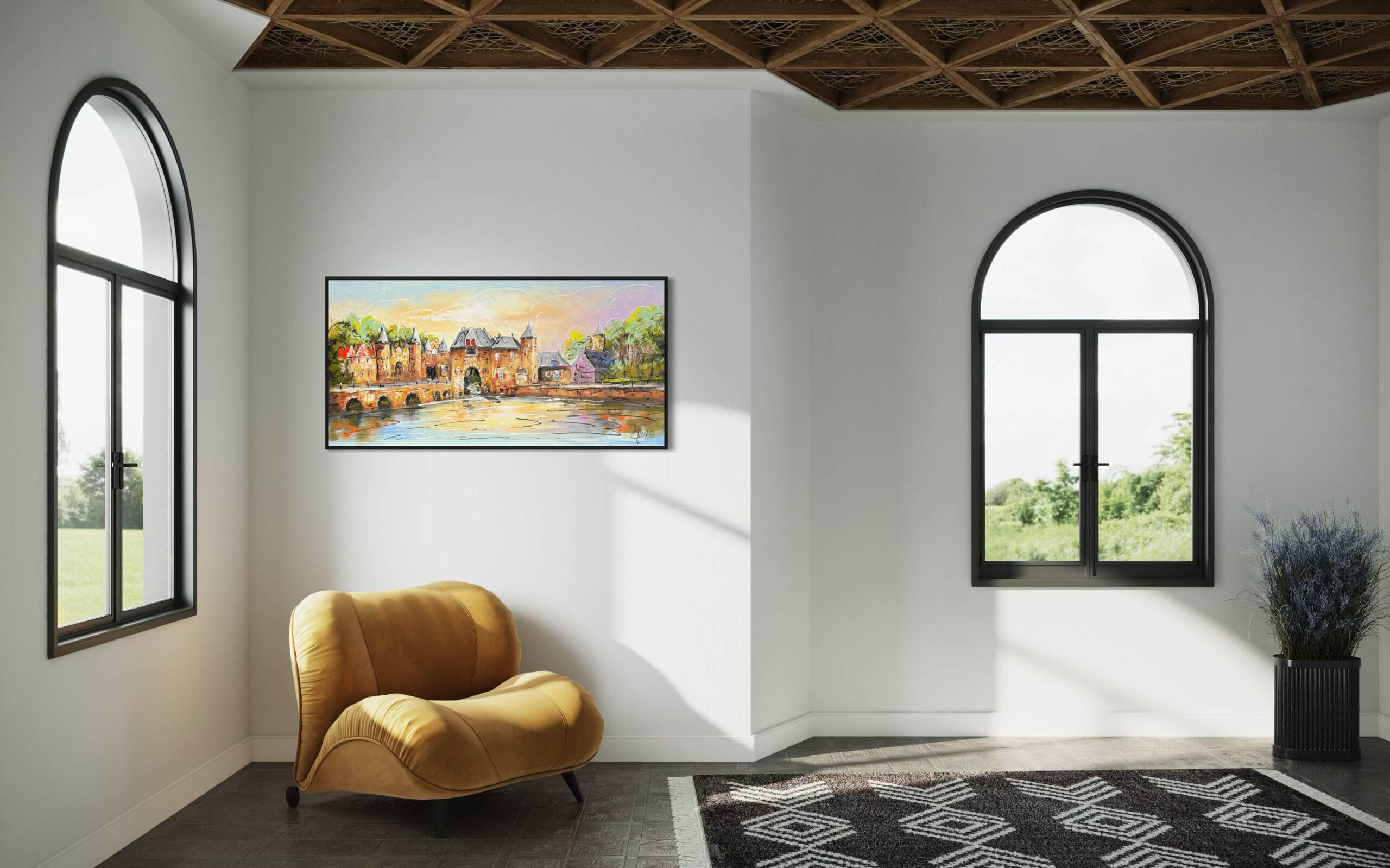
Have you been debating for months about which piece of art to hang above the sofa or in your office? If so, an art rental service for beginners is often the perfect first step. You don’t have to make a final decision right away, but you can experience how art transforms a space—in terms of atmosphere, ambiance, and everyday enjoyment.
People who are new to art lending often think it’s only meant for seasoned collectors or large companies. In reality, it’s actually an accessible way to discover art. You can take your time to see what suits you, without immediately committing to a major purchase.
What Makes Art Lending So Appealing to Beginners
The biggest advantage is simple: you can bring real art into your home or workplace without having to pay the full purchase price up front. That makes it more accessible—especially if you have an appreciation for art but aren’t quite sure yet which style, artist, or size would work best in your interior.
There’s another factor to consider. A piece of art often looks different in a gallery than it does at home. The lighting is different, the wall color is different, and the surroundings also play a big role. A piece that seems modest in the gallery can suddenly bring exactly the sense of calm or energy that a room needs. The opposite happens too. That’s precisely why renting is a pleasant interim step for many people.
For beginners, that freedom is more important than people sometimes realize. You’ll not only learn what kind of art you like, but also what you want to keep seeing in the long run. That’s a big difference. Something might be impressive at first glance, but it’s only after a few weeks that you’ll realize whether it truly fits into your daily life.
How does art lending work in practice?
The setup is usually straightforward. You select a piece of art, pay a fixed monthly rental fee, and hang or place the work in your own home. Depending on the terms of the arrangement, you can often set aside a portion of that amount toward a future purchase. This makes art lending not only flexible but also financially attractive for many people.
The exact terms and conditions vary by provider. That’s why it’s wise to look not only at the monthly price, but also at factors such as the minimum rental period, cancellation terms, any administrative fees, and whether you can use accumulated credit toward the same work or toward a different artwork. That may seem like a minor detail, but it determines how much freedom you actually have in your decision-making process.
Some people are mainly looking for variety and enjoy switching things up. Others use art lending specifically as a way to work toward a purchase. Both approaches make sense. So there isn’t just one right way to go about it.
What do you look for when making your first choice?
When borrowing art for the first time, people often have the same instinct: they start by looking for color. That’s understandable, but it’s usually not the best place to start. A piece of art doesn’t have to match the exact shades of your sofa, rug, or curtains to work well. Often, contrast is actually more interesting.
Start by asking yourself what you want to feel in a space. Are you looking for tranquility, warmth, energy, or perhaps a bold statement? In a living room, a large piece with depth and nuance can create a sense of cohesion. In an entryway or home office, a piece can be a bit more direct or striking.
Size is just as important as style. A piece that’s too small above a large sofa often gets lost, no matter how beautiful it is on its own. A piece that’s too large can dominate a space when that’s not the intention. If you’re torn between two sizes, it helps to mark the dimensions on the wall with painter’s tape. That immediately gives you a better sense of proportion.
Technique also plays a role. An original painting has a different presence than a print or a photographic edition. None of these choices is better than the others, but they do create a different atmosphere. Those who appreciate texture and the artist’s personal touch are often drawn to painting. Those who prefer clarity, rhythm, or tranquility sometimes find themselves drawn to printmaking or photography.
How much does it cost, and when is renting a smart choice?
The question about costs is a valid one. For beginners, art lending often only feels truly accessible once the financial details are clear. Fortunately, this is usually easy to explain. You pay a monthly fee to use the artwork, and in many cases, you also build up savings at the same time. This keeps the process straightforward.
Whether renting is a smart choice depends on your goal. If you want to see first-hand whether art truly enhances your home, renting is a safe option. If you’ve already set your sights on a specific piece and know you want to keep it, buying it eventually may be more cost-effective. But even then, art rental can be useful, since you might want to see how the piece looks on your wall for a while.
When it comes to commercial spaces, the situation is a bit different. Here, it’s not just a matter of personal taste, but also of making a good impression, creating the right atmosphere for clients, and fostering a positive environment for employees. A waiting room requires a different approach than an executive office or a conference room. Renting provides the flexibility to adapt as interior design trends change.
Common beginner mistakes
The first mistake is choosing based on a quick impression. Art should certainly make an immediate impact, but that initial “wow” factor isn’t always enough. You’ll be looking at it every day, so take the time to see if a piece continues to captivate you.
The second mistake is being too cautious in your choices. If you’re afraid that art will be too overpowering, you may end up with a piece that’s safe but lacks impact. A subtle piece can be beautiful, but only if that subtlety truly suits the space and your taste—not simply because it’s the least risky option.
A third mistake is not asking for enough advice. That’s a shame, because guidance is especially valuable when it comes to art lending. An experienced gallery or art lending service doesn’t just look at what’s beautiful, but also at size, lighting, wall color, framing, and the location where the piece will hang. That eliminates a lot of uncertainty.
Finally, people often underestimate the impact of presentation. A piece of art without a suitable frame or hung at the wrong height doesn’t look as good. Choosing art is therefore not just a matter of taste, but also of presentation.
Art lending for beginners, at home or in the office
At home, art is usually about personal expression. The piece should say something about your taste, your memories, or the atmosphere you want to create. In a living room, you often look for something you can enjoy looking at for a long time. In a bedroom or dining room, on the other hand, a sense of calm or tranquility can be just what you need.
In an office setting, the priorities are different. There, art must not only be beautiful but also suit the function of the space. In a reception area, a piece with a strong presence often works well, while a workspace benefits more from balance and concentration. Yet business art never has to be cold or distant. Contemporary art, in particular, can make a space more human and pleasant.
In both situations, personalized guidance makes all the difference. Especially if you have little experience, it helps to work together to figure out what does and doesn’t work. A company like Amersfoort Art can provide a great deal of peace of mind in this regard, precisely because it brings together art, advice, presentation, and custom framing.
How to Get the Most Out of Your First Art Lending Experience
Don’t go looking for the perfect piece as if there were only one right choice. Instead, think of your first rental period as a way to get acquainted. You’ll discover how a work of art interacts with the space, how it changes throughout the day, and whether you still enjoy looking at it over time.
Be sure to take photos of the spot where the artwork will be displayed, and consider the surrounding environment. A blank white wall calls for a different approach than a wall with furniture, books, or other objects. Art rarely stands alone; it’s the connection with the space that makes all the difference.
And give yourself room to change your mind. What appeals to you now doesn’t have to be your taste forever. That’s not a drawback—it’s precisely the strength of an art lending program. You don’t have to be certain about everything right away to still be able to live or work with art.
If you take your time, look closely, and seek advice, you’ll often quickly realize that art is less complicated than you thought. Not because it needs to be simplified, but because good art is meant to be accessible—every day, right there on your own wall.


