
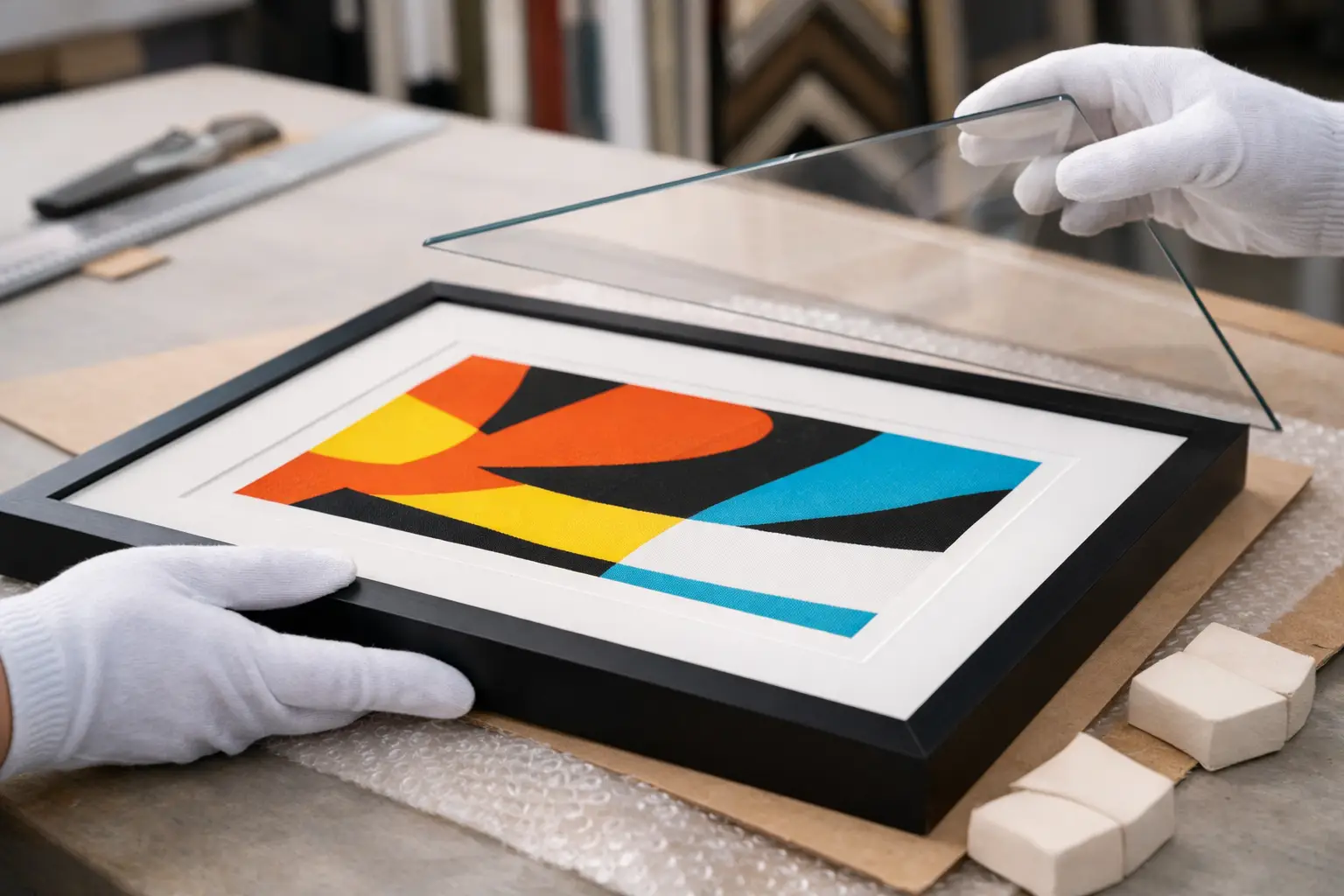
Having a silkscreen print professionally framed is different from simply placing a poster behind glass. Many silkscreen prints are hand-printed, signed, and numbered. It is precisely the visible texture of the ink, the quality of the paper, and any white border that make the work special. However, improper mounting can lead to discoloration, warping of the paper, or permanent damage. With the right materials and careful mounting, your artwork will not only look beautiful on the wall but also remain in good condition.
Why Screen Printing Requires Extra Attention
A screen print often consists of multiple layers of ink that have been applied to paper by hand through a screen. As a result, the ink may have a textured appearance. Furthermore, some types of paper are thick and fibrous, while others are thin and sensitive to changes in temperature and humidity. So the print isn’t always completely flat—and it doesn’t have to be.
In addition, the print run is usually limited. A number such as 34/100 indicates that this copy is part of a series of one hundred prints. The artist’s signature, usually located below the image, should remain visible and undamaged. A frame should therefore support the work without detracting from its character or value.
The biggest mistake is attaching a silkscreen print to a backing board. Tape, glue, and self-adhesive films can cause stains and are difficult—or impossible—to remove later. A standard frame with cardboard of unknown quality is also not a safe choice for a work you want to preserve.
Having a Screen Print Framed Safely: The Right Setup
Professional framing starts on the back. There, acid-free and archival-quality materials are used. These prevent acids from cardboard, wood pulp, or glue from slowly seeping into the paper. Especially with light-colored papers, damage caused by the wrong materials is sometimes only visible after years: the edges yellow, brown spots appear, or the paper becomes brittle.
The silkscreen print should preferably be mounted using small, reversible paper hinges. These are fasteners that are strong enough to support the work but can be safely removed by a specialist at a later time. This allows the paper some room to expand and contract slightly in response to changes in humidity. Securing it all the way around may sound safe, but it can actually cause tension and warping.
A mat is more than just a stylish border. It ensures that the glass does not come into contact with the artwork. Direct contact with glass is risky: condensation can cause the ink to stick to the glass, and a relief print can be damaged. For a piece without a mat, a spacer inside the frame can create the same protective space. Which solution looks best depends on the composition, the paper border, and your interior.
Should the edge of the paper remain visible?
That’s often a matter of taste, but with a signed silkscreen print, the border is usually part of the artwork. This is where the signature, title, year, and edition number appear. A generous mat literally gives those details breathing room and draws attention to the artwork. It can also help make a small-format piece look more striking on the wall.
Sometimes a silkscreen print has an irregular, hand-torn edge. You don’t need to hide it. In fact, a floating mount—where the entire paper edge remains visible—can look stunning. This does, however, require extra depth in the frame and particularly careful mounting. For a clean, borderless composition, a narrow mat may actually be a better fit.
Which type of glass provides the best protection for your screen print?
Glass plays a major role in how you perceive the colors and how well the artwork is protected. Regular glass is an affordable option, but it’s highly reflective and offers only limited protection against UV light. This can work just fine in a dark hallway. If the screen print is hanging in a bright living room, office, or across from a window, however, it’s wise to choose a higher-quality type of glass.
Museum-grade glass or anti-reflective, UV-protective glass provides a clear image with significantly less glare. The colors and the matte or glossy ink layers remain more visible, even when you’re not standing directly in front of the artwork. In addition, UV protection helps reduce the risk of fading. It makes a frame more expensive, but for a beloved, valuable, or hard-to-replace silkscreen print, it’s often a sensible investment.
Please note: UV-protective glass does not make a spot in direct sunlight safe. Light damage builds up gradually and is usually irreversible. Therefore, it’s best to choose a wall outdoors that is not in direct sunlight. LED lighting is also preferable to warm halogen lighting that shines directly on the artwork for extended periods.
You don’t choose the frame just for the color
A frame should complement your interior, but it must also be sturdy enough to support the size and weight of the silkscreen print. A slim aluminum frame can look stunning with graphic and modern artwork. A wooden frame often adds warmth and can lend a sense of calm to a colorful or expressive print. Black makes the image look bold, white creates a light, airy look, and a natural wood frame draws attention to the paper.
Don’t just look at a small sample. The width, depth, and color of a frame change the overall look of the entire piece. A very wide frame can overwhelm a small silkscreen print, while a profile that’s too narrow won’t provide enough support or presence for a large piece. The mat also plays a role: off-white is often softer than bright white and brings out the color of older paper better.
A good framer will therefore show you various combinations side by side. This way, you can see whether a frame complements the colors or, on the contrary, unnecessarily competes with the artwork. At Amersfoort Art, you can view a silkscreen print alongside potential frame profiles, so your choice isn’t based solely on a small sample.
Avoid these spots in your home
The best way to frame a piece depends on where it will be hung. Avoid walls next to a radiator, fireplace, or air conditioner. Rapid temperature changes and dry, warm air can cause paper to warp. Bathrooms, unheated sunrooms, and damp exterior walls are also less suitable, even if the frame appears to be tightly sealed.
Do not hang the silkscreen print directly across from a large window. Indirect daylight is usually not a problem, but intense sunlight at certain times of the day can take its toll. If you still want to display a piece in a bright room, combine UV-protective glass with window treatments and check occasionally to see if the colors or paper are changing.
The same applies to an office. A silkscreen print above a desk can really add to the atmosphere, but choose a spot where lights aren’t constantly shining directly onto the work surface and where visitors can’t easily touch it. In public areas, a sturdy hanging system is especially helpful.
Transport and Maintenance: Small Tasks, Big Difference
Place a loose silkscreen print—preferably flat or upright—in a sturdy folder, between clean protective sheets. Do not roll up the print unless necessary, especially if it is made of thick paper or has thick layers of ink. Handle the image as little as possible and hold the paper only by the edges with clean, dry hands.
Once framed, a silkscreen print requires little maintenance. Dust the frame with a soft, dry cloth. Do not use glass cleaner that could run down the edge of the glass into the frame. When moving the artwork, check that the hanging hooks and cord are still secure. For large pieces, a professionally installed hanging system is safer than a single nail.
Do you see warping, discoloration, mold spots, or the glass sticking to the surface? Don’t wait. Don’t try to remove the work yourself if you don’t know how it was installed. A specialist can assess whether repair is possible and what adjustments are needed to prevent further damage.
The right frame gives a silkscreen print a permanent place in your home, while still allowing you the freedom to display the work differently in the future. So take your time when choosing the material, glass, and mounting method. That way, you’ll enjoy looking at the print every day, and the next owner will still be able to see what the artist once put on paper.


