
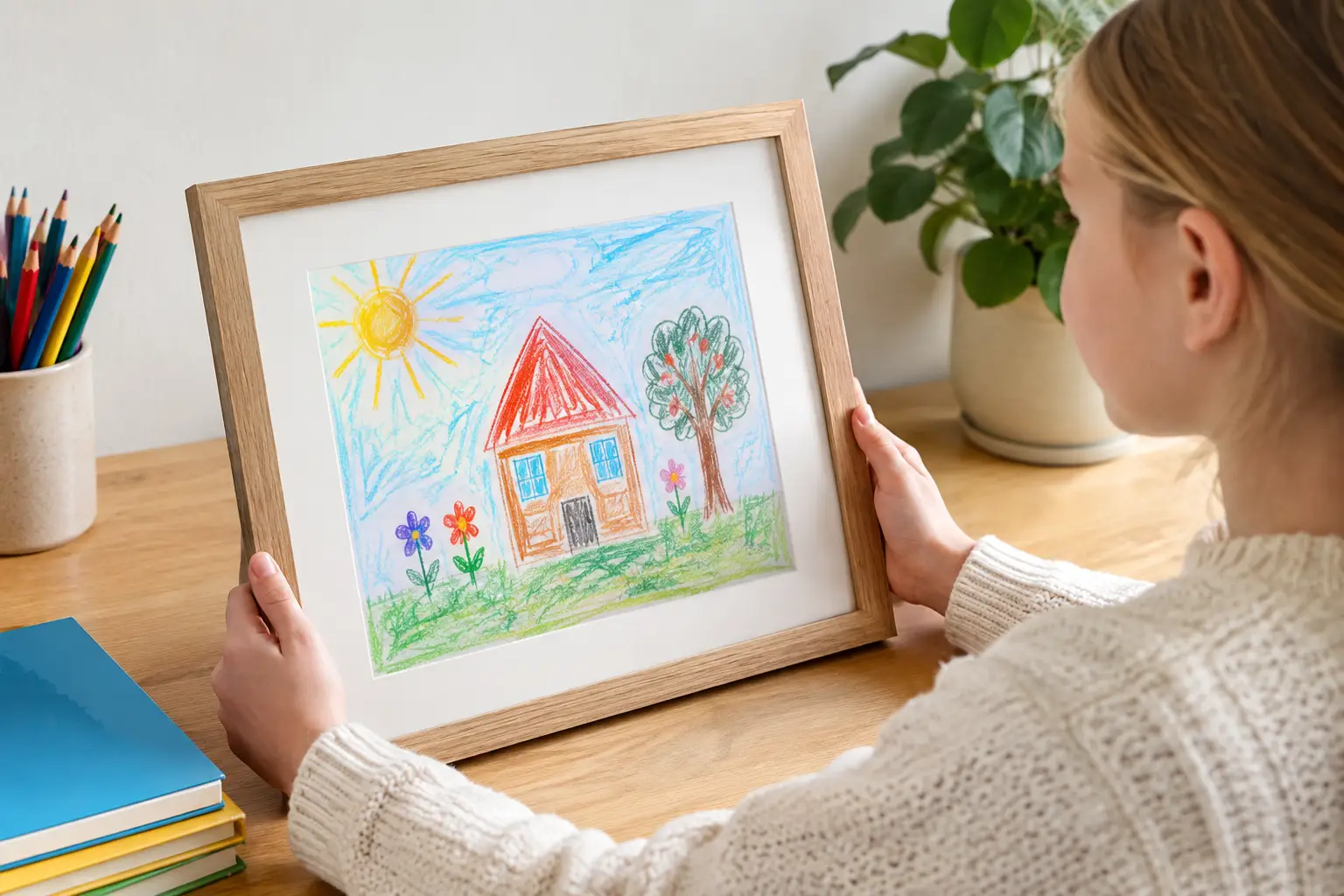
A drawing of a house tilted on the paper, a family with strikingly long arms, or a child’s first carefully written name: it’s precisely those details that make children’s art so precious. Framing children’s drawings in Amersfoort gives these little moments a permanent place in your home, rather than letting them disappear into a storage folder or kitchen drawer.
Why Have a Child’s Drawing Framed?
A framed child’s drawing is more than just decoration. It’s a personal work of art that preserves a memory of a particular age, imagination, or event. Hanging it on the wall gives such a piece the attention it deserves. What’s more, a beautiful frame can complement a calm, modern, or even colorful interior surprisingly well.
Not every drawing needs to be framed. Instead, choose a piece that tells a story: the first drawing from school, a birthday portrait, a vacation drawing, or a piece of art your child is especially proud of. By making a conscious choice, you’ll create not a wall cluttered with random memories, but a small, personal collection.
Framing Children’s Drawings in Amersfoort: How to Choose the Right One
The drawing is the starting point, not the frame. An expressive drawing done with bright crayons or markers often looks its best in a simple wooden or white frame. If the artwork has a lot of white space and delicate pencil lines, a subtle, narrow frame may be just right. For a more playful effect, the frame’s color can match a detail from the drawing, as long as the frame doesn’t overpower the artwork.
A mat often makes a big difference. The space between the drawing and the frame gives the work a sense of calm and prevents the paper from lying directly against the glass. This is especially nice for thin paper, chalk, charcoal, or drawings with texture. An off-white mat is timeless, while a colored one can further emphasize the energy of a child’s drawing.
Size is also an important consideration. Small drawings can be displayed generously with a wide mat. This ensures that an A4 sheet doesn’t look lost on a larger wall. If you want to hang multiple works together, choose a consistent style for the frame color or mat. The drawings may vary, but the presentation creates a sense of cohesion.
Protect the paper from discoloration
Children’s drawings are often created on paper that is sensitive to light and discoloration. If you want to preserve a piece for years to come, it’s best to choose acid-free materials. An acid-free mat and a conservation-grade backing help prevent the paper from yellowing or becoming brittle over time.
Glass protects against dust and handling, but sunlight remains a concern. Therefore, it’s best not to hang valuable drawings directly across from a window or in a spot with a lot of direct sunlight. UV-resistant glass offers extra protection. It’s a good choice for a piece that’s meant to hang for a long time, although it’s generally more expensive than standard glass. Acrylic glass is lighter and shatterproof, which can be practical in a child’s room, but it can scratch more easily and sometimes attract dust due to static electricity.
Do not use regular tape to secure the drawing to the backing board. Adhesive tape can leave stains and damage the paper if you want to replace the artwork later. A skilled framer will choose an appropriate mounting method that is as non-invasive as possible, ensuring the drawing lies flat without unnecessary risk.
From a flat drawing to a small art object
Not all children’s artwork is flat. A collage made with feathers, cardboard, glitter, or dried leaves requires more space between the artwork and the glass. A deep frame, also known as an object frame, prevents fragile parts from being flattened. If the piece has a lot of relief, it’s wise to first assess whether everything is secured firmly enough. Sometimes photographing or scanning the original is a better solution for everyday use, while the original artwork is kept safe.
Before framing it, be sure to make a good scan or take a photo. This isn’t just a handy keepsake—it also gives you the freedom to give a copy to Grandma and Grandpa as a gift without having to part with the original artwork. Don’t forget to write the name, age, and date on the back. In a few years, those simple details will make the drawing even more meaningful.
At Amersfoort Art, we can create a custom frame tailored to both the artwork and the space where it will be hung. Feel free to bring the drawing with you, even if you’re still unsure about the color, size, or glass. A simple, understated display doesn’t have to be expensive or complicated, but getting the right advice will help you avoid making choices you’ll later regret.
Above all, hang a child’s drawing where it best fits the memory it represents. Sometimes that’s in a prominent spot above the dining table; other times, it’s in a quiet corner of the hallway. No matter where it’s hung, a carefully framed piece of paper often says more about home than a perfectly chosen poster.


