
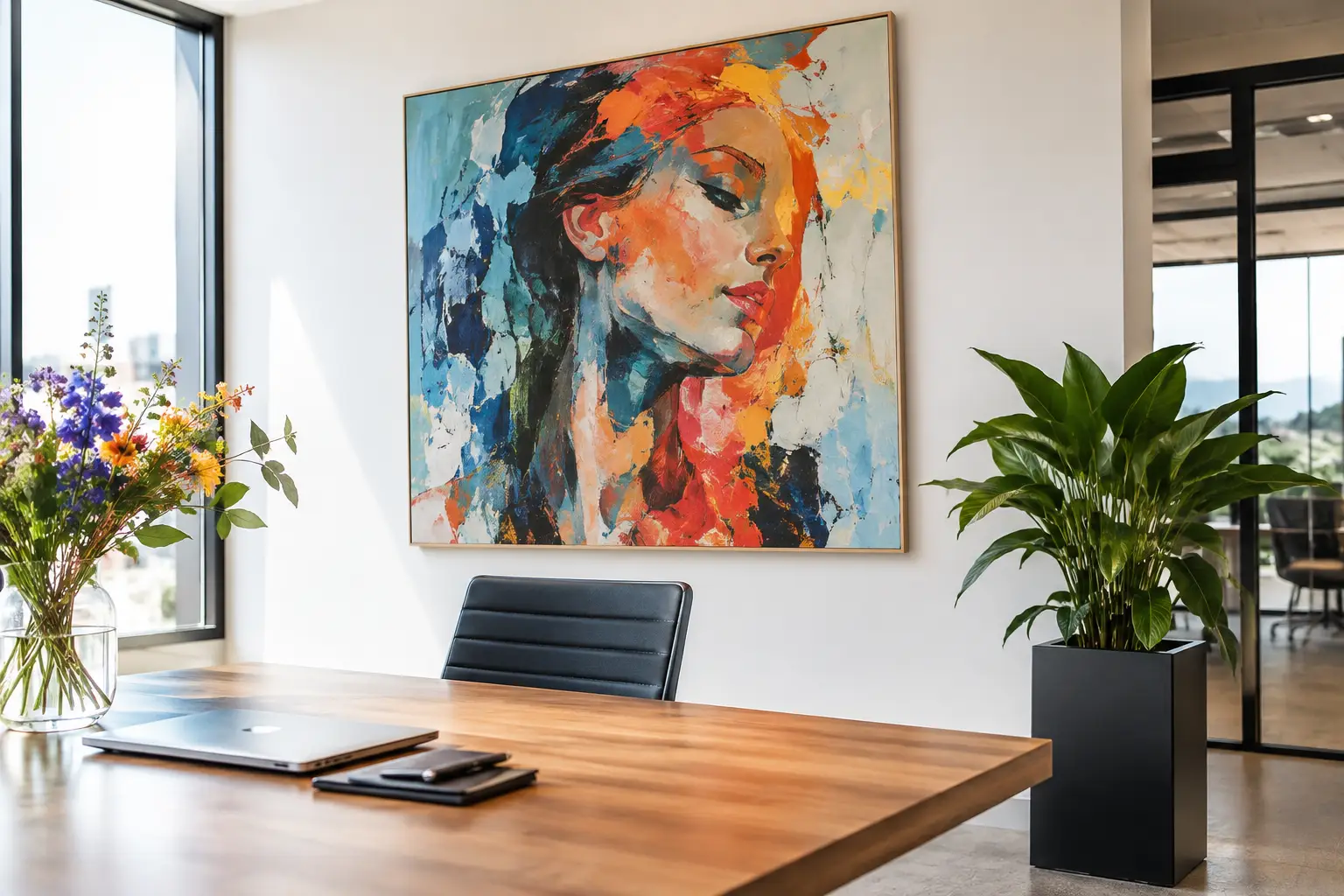
An empty wall in a lobby, conference room, or workspace does more than just feel unfinished. It also misses an opportunity to showcase what your organization stands for. With this guide to office art, you won’t just choose something pretty to hang on the wall—you’ll select art that suits the people, the space, and the image of your company.
Art in the office doesn’t have to be aloof, complicated, or permanent. In fact, when you consider color, scale, everyday experience, and flexibility, the choices become clearer. The goal isn’t to fill every wall, but to create an environment where employees, customers, and visitors feel welcome.
Why Art in the Office Makes a Difference
An office interior says something about an organization even before a conversation begins. Furniture, lighting, and materials all play a role, but art adds something that’s harder to capture in an interior design plan: personality. A powerful abstract piece can energize a creative department. A serene landscape can bring calm to a space where many meetings take place. A sculpture in the entrance hall adds more depth—both literally and figuratively—to the reception area.
For employees, art is not just a detail that only visitors notice. People who work in the same environment every day respond to color, rhythm, and atmosphere, often without even realizing it. A carefully chosen piece of art can provide a pleasant break from screens, schedules, and daily routines.
That said, art is not a quick fix for an awkward layout or poor lighting. Think of it as an important part of the whole. When the fundamentals of a space are right, art can make that space its own.
Start with the space, not the artwork
It’s very tempting to fall in love with a space first and then look for a location. That can work out well, but for commercial spaces, the reverse order often works better. First, consider the function of the space and the people who will be using it.
In the entryway, art should evoke an immediate response. A bright, larger piece or a sculpture often works well there, as long as it doesn’t obstruct the view or the walking path. In a meeting room, a work of art benefits from a sense of calm. It’s better to choose a single piece with a strong presence than several small works that draw attention away from the conversation.
Workspaces require a different approach. Too many visual stimuli can be distracting, while a completely neutral environment can feel cold. Consider using a calm composition, natural tones, or a series of pieces that create a sense of cohesion without constantly demanding attention.
Pay attention to the size and viewing distance
A piece that appears impressively large in a gallery may look small on a high office wall. Measure the available wall space and take into account furniture, doors, screens, and sightlines. Also determine the distance from which people will typically view the artwork. In a long hallway or open space, a larger, more sweeping piece has more impact than a small, detailed one.
Hang art at eye level, but adjust that guideline to suit the situation. Above a low bench, cabinet, or sideboard, the artwork may be hung slightly lower. In an entryway with a high ceiling, a larger vertical composition may actually look better. Personal advice and a visualization of the artwork on the wall can help you accurately assess those proportions in advance.
Choose a style that feels right without becoming predictable
Many organizations look for art that matches their corporate identity. That’s understandable, but an office doesn’t have to become an enlarged version of the logo. When every color is replicated exactly, art quickly loses its own power. Instead, look for a connection in atmosphere, material, or a recurring color tone.
For example, a company with a calm, high-end interior design might opt for layered abstract art, photography, or graphic work with subtle color accents. In a more distinctive, creative environment, art can provide contrast: an expressive painting, a colorful silkscreen print, or an eye-catching sculpture. It is precisely that contrast that can bring a space to life.
Don’t involve employees by having everyone vote on every project. That often leads you to settle for the safest choice. Instead, ask a few people from different teams what they feel is missing in the work environment: tranquility, color, inspiration, or a sense of connection. That input provides direction, while keeping the final selection clear.
Guide to Art in the Office: Rent or Buy?
The right approach depends on your goal, budget, and the extent to which your interior will change. Purchasing is a good option when you’ve found a piece that is a lasting fit for the organization and the space. It becomes part of the interior design and can serve as a recognizable element for employees and visitors for years to come.
Renting gives you the flexibility to experiment and make changes. This is especially helpful when moving, expanding, setting up a temporary space, or when you want to see how a piece of art feels in everyday life. An art lending service makes it possible to display high-quality art on your walls without having to make a major purchase decision right away. For organizations that want to regularly give their lobby or meeting room a fresh look, rotating the art is also an attractive option.
Don’t just look at the monthly fee or purchase price. Also consider service, shipping, installation, insurance, and any trade-in options when making your decision. A solution that seems inexpensive on paper may be less practical if you have to figure out on your own how to safely transport or install the item.
Turn art into a cohesive plan
A single piece of art can make a big difference, but when decorating multiple rooms, a simple art arrangement helps. That doesn’t mean every piece has to be in the same style. However, it’s nice if the color, size, technique, or theme share a subtle connection. This creates a sense of cohesion without making the office look like a showroom.
Start, for example, with the public areas: the entrance, reception, and conference room. Then choose one focal point per floor or department. A series of graphic works in the hallway, a painting in the executive office, and a sculpture at the reception desk can be very different yet still complement each other when they are carefully selected.
Don’t forget the frame, either. The frame determines how a piece relates to the wall and the interior. A slim black frame can look graphic and modern, while wood adds warmth and a light-colored frame gives a piece more space. For works on paper, the combination of mat, glass, and frame is just as important as the image itself.
Practical considerations that are often overlooked
Art deserves a place where it is safe and clearly visible. Avoid exposing delicate works—especially paper and photographs—to bright, direct sunlight. Also, do not place art directly above a radiator or on a damp wall. In high-traffic areas, it’s wise to take into account the risk of bumps, bags, and cleaning activities.
Think about installation in advance. Heavier pieces, large frames, and sculptures require a suitable surface and professional mounting. In rented spaces, there may also be restrictions regarding drilling and wall finishes. By taking this into account from the start, you can prevent a carefully selected piece from ending up in storage.
Transitional moments are also worth planning for. A new season, an anniversary, a renovation, or a change in interior design can be a good reason to reevaluate your art collection. You don’t have to replace everything. Sometimes, just one new piece in a prominent spot can give the entire space a different energy.
Personalized advice makes choosing easier
Choosing art for an office is often a collaborative decision, but it doesn’t have to be a lengthy process. A good selection starts with photos, dimensions, an idea of the interior, and a clear budget. Then you can focus more specifically on pieces that are truly a good fit, rather than endlessly sifting through options that won’t work for your situation.
Amersfoort Art guides business clients through this process—from initial exploration and selection to presentation, framing, and delivery. This comprehensive approach is especially valuable when you’re not only looking for a beautiful piece of art but also want to ensure it’s displayed in the right place to look its best.
Above all, give yourself time to let a piece of art settle in. Art in the office doesn’t have to move everyone in the same way right away. If the artwork enhances the space, sparks questions, or remains a pleasure to look at day after day, it has found exactly the right place.


