
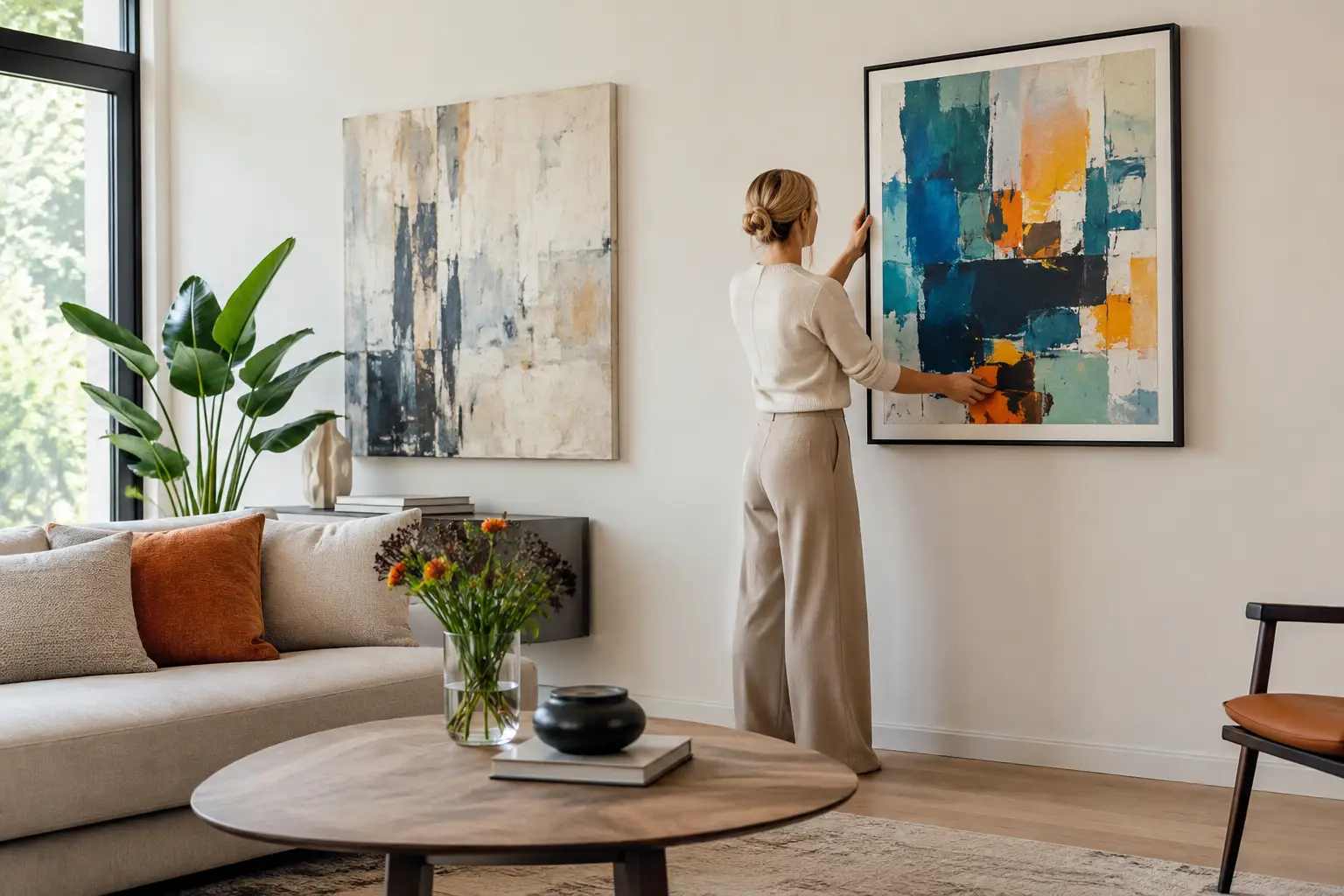
A work of art may make an immediate impression in a gallery, but it only truly takes on meaning at home. The lighting is different, the wall is a different color, and your interior tells its own story. That’s precisely why the most important art lending trends aren’t just about which art is popular, but above all about freedom: taking your time to choose, experiencing it at home, and regularly seeing something new on your wall.
For those who love to live surrounded by art but don’t want to make every decision final right away, this is a welcome development. Renting art leaves room for curiosity. You can discover whether a powerful abstract work, a refined print, or perhaps a colorful painting suits you—without committing to it before you’re sure.
Experience Art Before You Buy
There’s a growing desire to see art in one’s own environment first. That makes sense: a piece that looks stunning in a spacious, well-lit gallery can feel very different at home. Sometimes it turns out to be exactly the missing touch of color in the living room. Other times, a piece calls for a different spot, a different frame, or a more serene setting around it.
Art lending aligns with this approach to choosing art. You rent a piece for a period of time, hang it on your own wall, and give yourself time to get used to it. First impressions are valuable, but art that continues to captivate often only reveals itself after days or weeks. You’ll notice new details, observe how the artwork changes with the light of day, and discover the atmosphere it brings to a room.
Moreover, renting isn’t just a stopgap for those who are undecided. For many art lovers, it’s a deliberate way to bring variety into their homes. A large, expressive piece can take center stage for a season, after which a more subtle work of art can give the same room an entirely new feel.
Art Lending Trends: Less Ownership, More Engagement
The shift from ownership to use is also evident in the art world. Not because art is becoming less valuable, but because people want to make more conscious choices. They aren’t looking for quick decorations, but for a piece with character that suits their taste, home, and daily life.
Renting offers an attractive advantage in this regard: you don’t have to choose between quality and flexibility. You can bring art by professional artists into your home while still allowing your tastes to evolve. Moreover, those who regularly switch out their artwork learn more quickly what truly appeals to them. Perhaps figurative art will fascinate you for much longer than you expected. Or maybe a graphic work will bring exactly the calm that a busy interior needs.
Saving while renting also fits in with this trend. It makes a potential purchase easier to plan and gives you the flexibility to make a decision when the time is right. This is different from remaining indecisive without any commitment. Rather, it is a thoughtful path toward art ownership, guided by experience.
A more personal choice than a trendy color
Interior design trends can be a useful starting point, but art doesn’t have to match what’s everywhere this season. A well-chosen piece remains interesting even as furniture, wall colors, or accessories change. That’s why the focus is shifting from “What’s in style right now?” to “What really suits me?”
That doesn’t mean art is separate from the interior. On the contrary. The right combination enhances both. In a minimalist interior, a colorful painting can add excitement and warmth. In a home with lots of materials and textures, a subdued piece can actually create balance. The best choice depends on scale, color palette, lighting, and the spot where you’ll see the piece every day.
Making a personal selection sometimes requires a little help. Not everyone knows right away which technique, artist, or style is the right fit. A consultation with an expert often starts very simply: what colors are featured in your home, what mood do you want to create, and on which wall will the artwork get the attention it deserves? With that information, the search becomes more focused, without losing the element of surprise.
The wall as part of the story
A notable trend is that art is increasingly being incorporated into interior design with greater intention. Not as a final step, once all the furniture is already in place, but as a defining element of the space. A work of art can define a seating area, give a lobby more character, or make a home office less functional and more personal.
Size often matters more than people realize. A piece that’s too small can get lost on a large, empty wall, while a generously sized piece can actually bring a space together. It doesn’t always have to be large: a series of smaller works or a carefully chosen print can be just as powerful. It’s all about proportion and focus.
Framing also plays an important role here. The frame is not a mere afterthought; it helps determine how a work is perceived in a space. A light wooden frame can create a soft, natural look. A slim black frame often adds contrast and clarity. For art on paper, a suitable frame protects the work and ensures it can be enjoyed for years to come. Those who rent art can also discover which presentation works best before making a final decision.
Changing Without Anxiety
Changing the art on your walls regularly might sound like a choice for constant change. In practice, however, it can actually bring a sense of calm. You don’t have to search endlessly for that one piece that fulfills all your wishes at once. You can make a choice for this moment, for this space, and for the atmosphere that suits you right now.
That makes art lending particularly well-suited to changing living and working situations. After moving, it can be nice to first get a feel for which art pieces complement the new lighting and layout. When a room takes on a different function, a new artwork can help make that change visible. And for those who have been collecting art for years, renting art can provide a fresh contrast to their own collection from time to time.
However, changing things out does require some attention. If you hang something new every few weeks, a piece of art has little chance of becoming part of your everyday environment. A longer rental period often works better: long enough to really take a look, short enough to stay curious. What’s ideal varies from person to person and from space to space.
Art in the workplace can be more than just decoration
Business spaces, too, are increasingly calling for art with a unique character. A reception area, conference room, or office conveys something about the organization to visitors and employees. Art can add warmth to a minimalist environment, spark a conversation, or make a space feel less generic.
For businesses, renting is often practical because the display can evolve in tandem with a move, renovation, or changing corporate identity. Still, the choice isn’t purely functional. A good piece of art should fit the atmosphere an organization wants to project, without becoming mere showroom decor. In a space where many people gather, accessibility is often important. In an executive office or creative studio, however, a piece of art can be more bold and expressive.
Personalized advice, delivery, and the careful installation of art make all the difference. Art deserves attention from the moment it is selected until it is actually hung on the wall. At Amersfoort Art, this combination of art, guidance, and presentation is central to our approach, so that both private and business clients can make their selections with confidence.
How to Choose Art That Continues to Surprise You
Don’t start by asking what kind of artwork suits the bank; instead, start by asking what you want to look at for a long time. Art can pick up on colors from your interior, but it doesn’t have to match exactly. An unexpected color or style can actually add depth and personality.
Next, take a look at the space. Measure the available wall space, take a photo of the room, and pay attention to light sources, sightlines, and furniture. A piece of art above a cabinet or sofa requires different proportions than art in a narrow hallway. If you’re torn between two sizes, a slightly larger piece often makes a stronger statement, provided the wall offers enough space.
Then give yourself some time. Hang the artwork, live with it, and look at it at different times of the day. Ask yourself not only if it’s beautiful, but also if it adds something to the space. Does the room feel more like your own? Does the piece remain interesting when you walk past it without consciously looking at it? If so, you’re close to making a choice that not only looks good but will also continue to feel right.
Art doesn’t have to stay in the same place forever to be valuable. Sometimes a personal collection starts with just one piece that you dare to take home—first to experience it, and then, perhaps, to keep it forever.


