
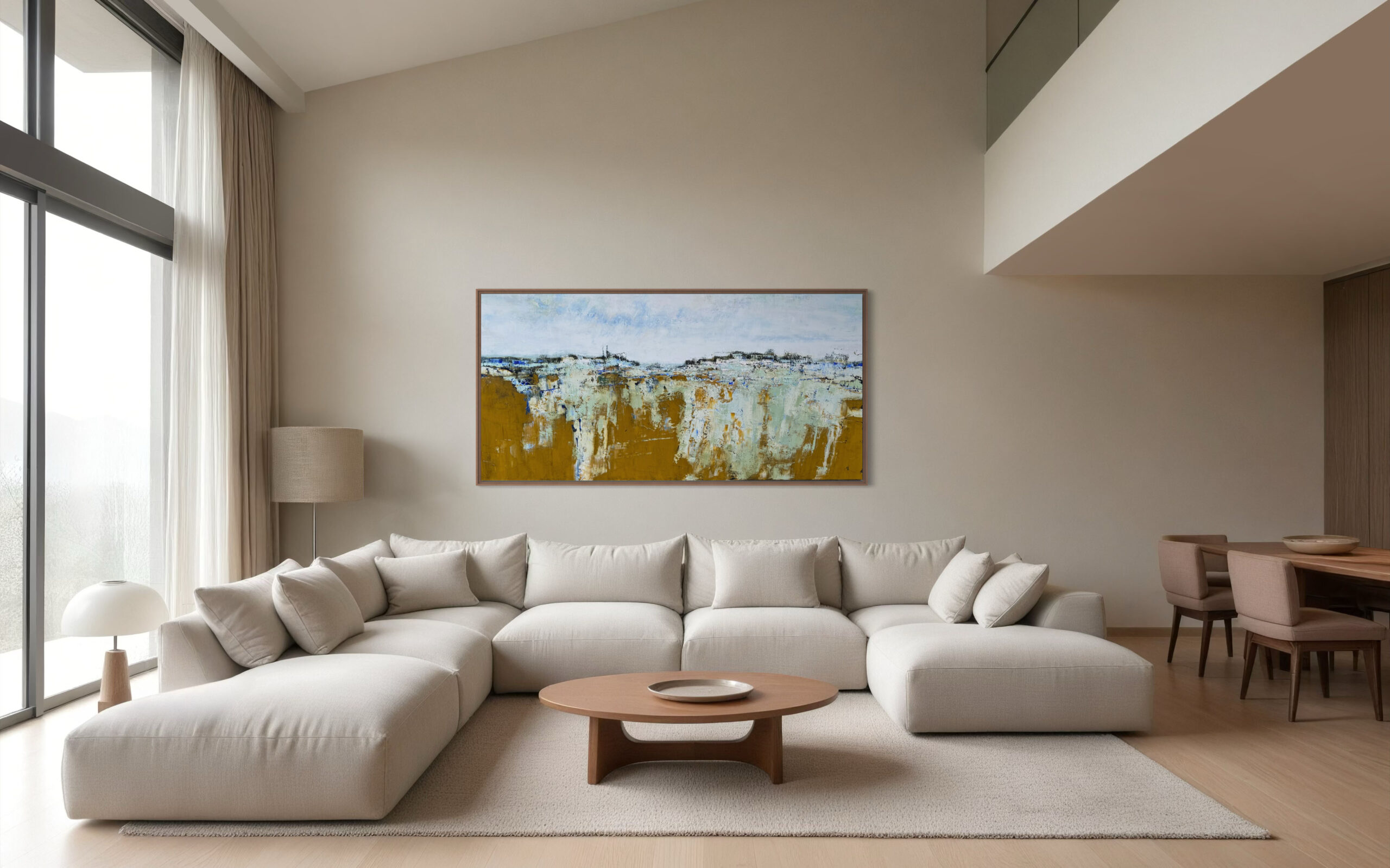
A work by Emiliana Cordaro does not usually attract attention with harsh contrasts or busy imagery. It is precisely the tranquility, layeredness and refined structure that make many enthusiasts do a targeted search on buy emiliana cordaro painting. Once touched by that aura, one does not want just a pretty canvas on the wall, but a work that gives a space lasting character.
Why an Emiliana Cordaro painting is so appealing
Not every art buyer is looking for something outspoken or confrontational. Instead, many interiors call for a work that brings atmosphere without falling away. That is often where Emiliana Cordaro’s appeal lies. Her work is appreciated for its balance of sophistication and presence. It is art that can make a space quieter, warmer or more exciting, depending on format, use of color and composition.
This also makes the choice personal. One painting works beautifully in a bright living room where tranquility is central, while another work will look better in an office, reception hall or bedroom. Anyone orienting on a purchase, therefore, soon notices that not only the image itself counts, but also the environment in which it will hang.
Buy or rent Emiliana Cordaro painting
You do not choose a painting separately from the wall on which it will be placed. That sounds logical, but in practice people often buy by feel first and only then see if the work really fits in size and appearance. Especially with contemporary art that difference can be large.
In a compact interior, a work that is too small can look lost, no matter how strong the painting is on its own. Conversely, a large format can actually lift a space, as long as the wall offers peace of mind for it. With an Emiliana Cordaro painting, this plays an extra part, because subtlety is part of the experience. A work with soft transitions and layered tones needs space to breathe.
Therefore, look not only at dimensions on paper, but also at sight lines in your home or office. What do you see when you walk in? Where does daylight fall? And at what time of day do you really want to experience the work? A painting next to a busy closet wall requires something different than a work above a dresser or on a long clear wall. Still having doubts? Then consider the possibilities of the Art Loan.
Format determines more than you think
Size is not only a practical choice, but also a matter of appearance. A smaller painting feels more intimate and demands closeness. A larger work more quickly sets the tone in a room. Both can work well, but not for the same effect.
If you are in doubt between two sizes, it often helps to first mark out the wall visually. This will give you a feel for the proportions. Especially if you are looking for art that can grow with your interior for a long time, this step is worth taking.
Color should match but not coincide
Many buyers look for art in colors that match furniture, flooring or wall finishes. That’s understandable, but a painting doesn’t have to match exactly to work beautifully. Indeed, when everything matches too literally, an interior can become flat.
When choosing a work by Emiliana Cordaro, it is often more interesting to look at color families and undertones. Do the warm or cool nuances match the mood of the space? Does the work counterbalance a sleek interior, or does it enhance a soft, natural look? These kinds of choices make the difference between decoration and art that really adds something.
What to look out for when buying a painting
Buying a painting is partly emotional and partly practical. That very combination makes good advice valuable. You don’t have to have art historical knowledge to make a strong choice, but it does help if you know what to look for.
The first question is simple: does the work continue to captivate? A painting that is pleasing at first glance, but after a week no longer evokes anything, often fits less well than a work that slowly reveals more. With layered contemporary art, that longer view is often important.
In addition, the finish is relevant. Consider the quality of the canvas, the tension of the linen, the way color areas are constructed and whether or not a frame is desired. Presentation also counts. A work can look very different on a white gallery wall than in a home with warm light and materials such as wood, steel or natural stone.
Original work requires trust
Anyone buying a painting wants assurance about provenance, condition and presentation. This is not a formality, but an important part of a pleasant purchase. Especially when you invest in a work that will have a permanent place for years to come, it is nice if you are well guided in the choice.
That’s why many buyers look for a gallery that not only sells, but also thinks about placement, format and finishing. This makes the process calmer and more manageable. You then don’t just buy an object, but more confidently choose a work that fits into your everyday life.
Does an Emiliana Cordaro painting fit any interior?
The short answer is no – but that’s actually positive. Good art doesn’t automatically fit everywhere. It works best when style, space and personal taste reinforce each other.
In modern interiors with lots of light, quiet materials and clean lines, Emiliana Cordaro’s work can stand out particularly strongly. Subtlety is given space there. In a more classic or fuller interior it can also work well, but then the exact choice is more important. Sometimes a more powerful work is needed to maintain sufficient presence, sometimes just a smaller size in a carefully chosen spot.
A lot is also possible for business. A consulting room, entrance hall or executive office often requires art that exudes quality without becoming dominant. There, a painting by Emiliana Cordaro can play a beautiful role. At the same time, a dynamic catering environment or a very colorful setting may require a different type of work. So it depends on the context.
Buy it, or experience it quietly first?
Not everyone wants to decide right away. That is quite normal. You often buy art with the eye as well as with time. A work that convinces in a gallery may feel slightly different at home. Conversely, it often happens that a painting really comes to life in your own space.
For many art lovers, therefore, it is nice when there is room to consider, compare and get advice without pressure. Especially with a name like Emiliana Cordaro, where nuance and atmosphere play a major role, it helps to calmly look at different works, formats and presentation options.
At Amersfoort Art, that way of choosing fits well with how many customers want to experience art: expertly guided, but without a threshold. Not everyone buys from the same motivation. Some seek an eye-catcher for a new home, others a refined work for an existing collection or a representative space in the office.
The importance of framing and presentation
Sometimes the very finish makes all the difference. A painting without a frame can look very contemporary and direct. An appropriate frame can actually add tranquility, depth or elegance. What is better depends on the work and on the space.
Therefore, it is smart to look not only at the painting itself, but also at the final presentation. How high does the work hang? What wall color is behind it? Is there a need for a tight finish or a softer frame? These seem like details, but they greatly determine how the painting is perceived.
When is this the right purchase for you?
If you are looking for art that screams, provokes or is especially trendy, an Emiliana Cordaro painting is probably not your first choice. Instead, if you are looking for a work with tranquility, sophistication and lasting appeal, it may be a great fit.
The right purchase usually doesn’t feel like a quick transaction. It feels like recognition. You see a work and notice that it evokes something that is difficult to explain in one sentence, but immediately fits the space and your taste. That’s often the best starting point.
Therefore, allow yourself the time to look carefully. Not only at the painting, but also at what you want to add to your home or workplace with it. Art only really lives when it becomes part of the environment – and of the people who walk past it every day.


