
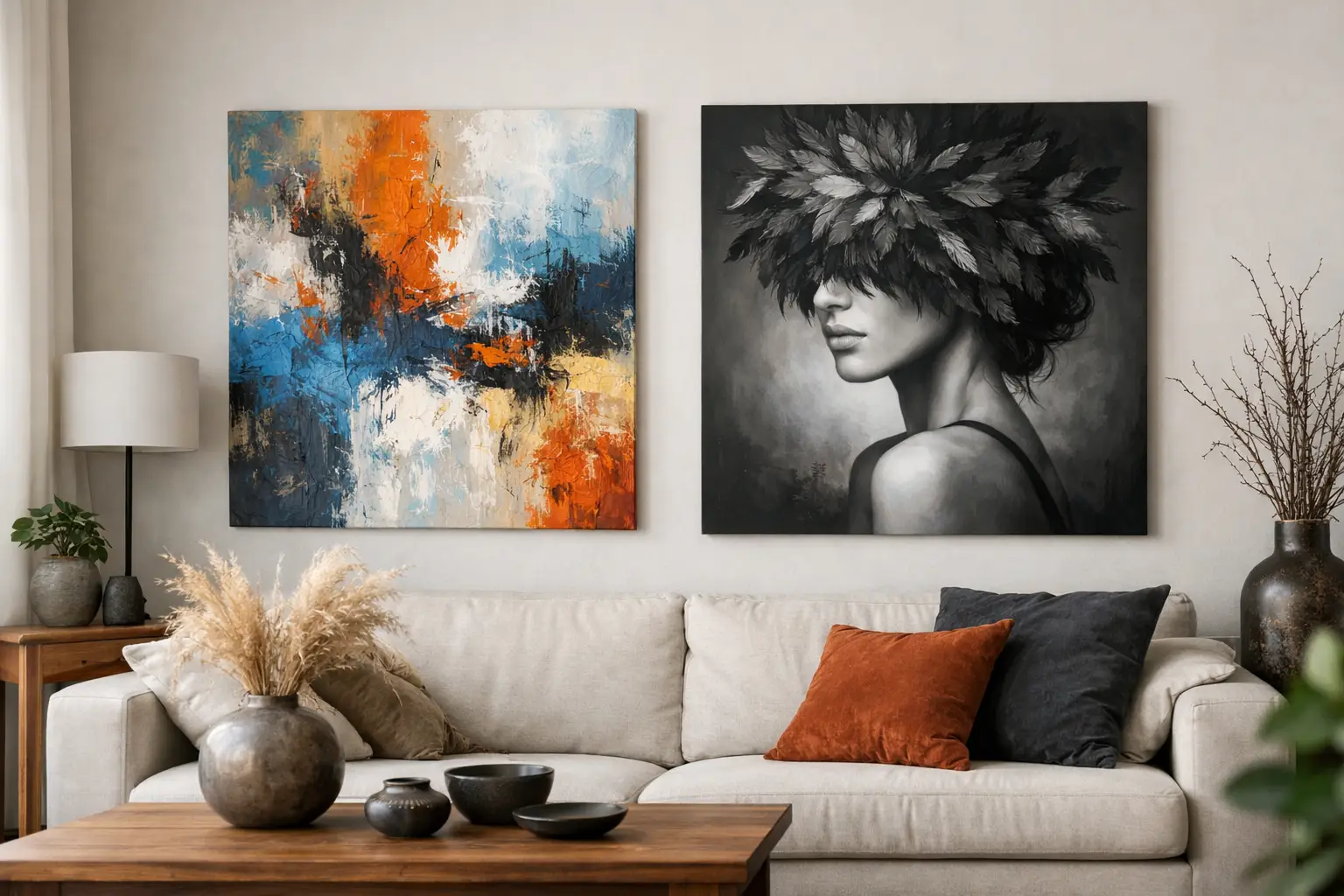
A piece of art that makes an immediate impact in the gallery might suddenly feel too small, too busy, or—surprisingly—just right when you bring it home. That’s why choosing art for your walls isn’t just about taste. It’s also about the space, the light, the furniture, and above all, the feeling you want to experience every day when you walk in. With a few thoughtful choices, art becomes more than just a decorative accent—it becomes a personal part of your interior.
Start with the wall, not just the artwork
Many people are initially drawn to an image, a color, or an artist. That’s an excellent starting point, but after that, take a moment to consciously consider where the artwork will be hung. A large, expressive painting can add character to a quiet living room, while the same piece in a small, cluttered hallway can quickly become overwhelming.
Look at the wall as a whole. Is it wide or narrow, tall or short? Is there a sofa, sideboard, or dining table in front of it? And how many other visual elements are already there, such as an eye-catching rug, wallpaper, or open cabinet? Art takes up the space that remains around it. A calm wall can often accommodate a bold piece, while a busy setting tends to call for simplicity, a solid color, or a refined graphic.
The function of the room also plays a role. In the living room, art can spark a conversation and draw attention. In a bedroom, on the other hand, many people seek peace, tranquility, or stillness. An office space can benefit from a piece of art that energizes without distracting. There’s no hard-and-fast rule about what belongs where. The best choice is the one that fits how you use the space.
Choosing Wall Art in the Right Size
Size is often more important than people realize. A beautiful small piece can get lost on a large wall. Conversely, a large canvas in a compact space can throw the proportions off balance. So be sure to measure the available space before you go shopping.
Above a sofa or sideboard, art usually looks best when it spans about two-thirds of the width of the piece of furniture. Don’t hang it too high: for most people, the center of the artwork should be around eye level. Above a piece of furniture, it can be hung slightly lower so that the art and the interior feel like a single, cohesive whole.
Do you have a tall, empty wall? Don’t automatically opt for a single, enormous piece. A series of two or three works can beautifully complement the height and bring a sense of rhythm to the space. In this context, cohesion is more important than identical frames or exact dimensions. The works can differ, as long as color, subject, technique, or atmosphere create a connection.
A practical test is extremely helpful: use painter’s tape to mark the outer dimensions of the artwork on the wall, or cut a sheet of paper to size. Then step back a few meters and assess the proportions from the spot where you usually sit or enter the room. This will help you avoid choosing a size that’s too small or too large based on a small image.
Don’t forget to consider the frame size
When it comes to framed prints, photographs, and drawings, it’s not just the image size that matters. A mat and frame can make the work appear significantly larger and also give it a more balanced look on the wall. A delicate line drawing, for example, takes on a greater presence with a generous, light-colored frame. With a colorful piece, on the other hand, a narrow, understated frame can help keep the focus on the image itself.
Choose a color based on the mood, not on a perfect match
Art doesn’t have to feature exactly the same colors as your pillows, curtains, or wall paint. In fact, a color match that’s too perfect can quickly become predictable. It’s more interesting to look for a color that reappears in subtle details, or one that adds an exciting contrast.
In a neutral interior, a piece featuring deep blue, red, ochre, or bright green can serve as a powerful focal point. If your home already has a lot of color and pattern, a piece in earth tones, black and white, or subdued pastels can help create balance. Be mindful of the undertones. A cool gray with a blue undertone feels different from a warm gray with hints of beige or pink, even if the difference seems subtle on a screen.
Light affects how colors are perceived throughout the day. Northern light is often cooler, evening light warmer, and spotlights can make sheen or texture more visible. It’s therefore best to view a work of art under different lighting conditions. For works on paper and photographs, it’s wise to protect them from bright, direct sunlight. This helps colors stay vibrant longer.
Follow your taste, but give yourself time
An interior design style can provide direction, but it doesn’t have to limit your choices. An abstract piece can look stunning in a classic home. A figurative etching, on the other hand, can add a sense of excitement to a sleek, modern interior. The combination becomes personal when you choose a piece that continues to captivate you—not just something that currently goes well with the couch.
Ask yourself a few simple questions. Where does your gaze linger? Are you looking for something familiar—a landscape, a face, or an urban scene? Or does abstraction appeal to you because color, line, and material constantly reveal something new? Do you prefer clean forms and graphic strength, or layers and a visible artistic style?
A work of art doesn’t have to be completely understandable right away. Sometimes, it’s precisely a piece that raises a small question that you’ll keep looking at for years to come. At the same time, doubt isn’t necessarily a sign that you have to buy it. If you mainly think a piece “will fit in,” but don’t feel any real curiosity about it, feel free to keep looking.
Original, edition, or art print?
The technique influences the work’s appearance, price, and exclusivity. A unique painting, sculpture, or drawing exists in only one copy. That makes it special, but often also requires a larger investment. Prints, such as etchings, lithographs, or screen prints, are usually produced in limited editions and are often numbered and signed by the artist. This allows you to bring an original work of art into your home that may be more affordable.
Photography and high-quality art prints can also be excellent choices, especially when the image and finish have been carefully selected. Don’t let yourself be guided solely by the technical aspects; ask about the edition size, materials used, signature, and framing method. This information will help you properly evaluate a work and choose one that fits your budget and preferences.
Create a composition if a single work isn’t enough
Some walls call for a single statement piece, while others call for a collection. A wall featuring multiple works can be very personal, but it works best when there’s a concept behind it. That could be a shared color palette, a common theme, a combination of different graphic works, or even a collection inspired by travels and special moments.
Lay out the composition on the floor first before you start drilling. Start with the largest piece and build around it. Make sure to keep the spacing even—usually about five to ten centimeters. Too much space makes the individual pieces seem disconnected; too little space makes the wall look cluttered.
Would you like to create a gallery wall with different styles? Then repeat at least one element: for example, black frames, light oak frames, understated mats, or a limited color palette. It’s precisely that repetition that gives the rest of the arrangement freedom. A perfectly symmetrical arrangement works well with a calm, formal interior. A more playful arrangement often feels warmer and more personal.
Renting Can Reduce Uncertainty
You choose art with your eyes, but ultimately, it’s also a reflection of your daily life. A piece that looks beautiful in a showroom still needs to complement the lighting, the wall, and your personal taste once it’s in your home. If you’re unsure about the size, color, or style, you may find it helpful to rent the piece before deciding to buy it.
Through Amersfoort Art’s art lending service, you can see how a piece of art enhances your space and gradually refine your preferences. This is especially helpful if you’re still changing up your interior, want to decorate multiple walls, or enjoy switching things up. Renting art makes your initial choice less definitive, without compromising on quality or aesthetic appeal.
Personalized advice can also make a big difference. A photo of the space, the wall dimensions, and a sense of your interior design already provide a solid foundation for a tailored proposal. Don’t forget to consider delivery and professional installation as well. A beautiful piece of art deserves to be hung securely in a way that does justice to its composition.
Let the work breathe
There’s a tendency to fill every empty space. Yet art often has a greater impact when the wall around it is allowed to remain uncluttered. Give a piece of art some space from lamps, tall plants, cabinets, and other accessories. Not because a space has to be bare, but because drawing attention is part of presenting it.
Ultimately, don’t choose a piece of art just because there’s a wall space left. Choose a piece that adds something to the way you live, work, or entertain. If, after a busy day, you take a moment to look at it and discover a new detail, color, or feeling time and time again, it has found exactly the right spot.


