
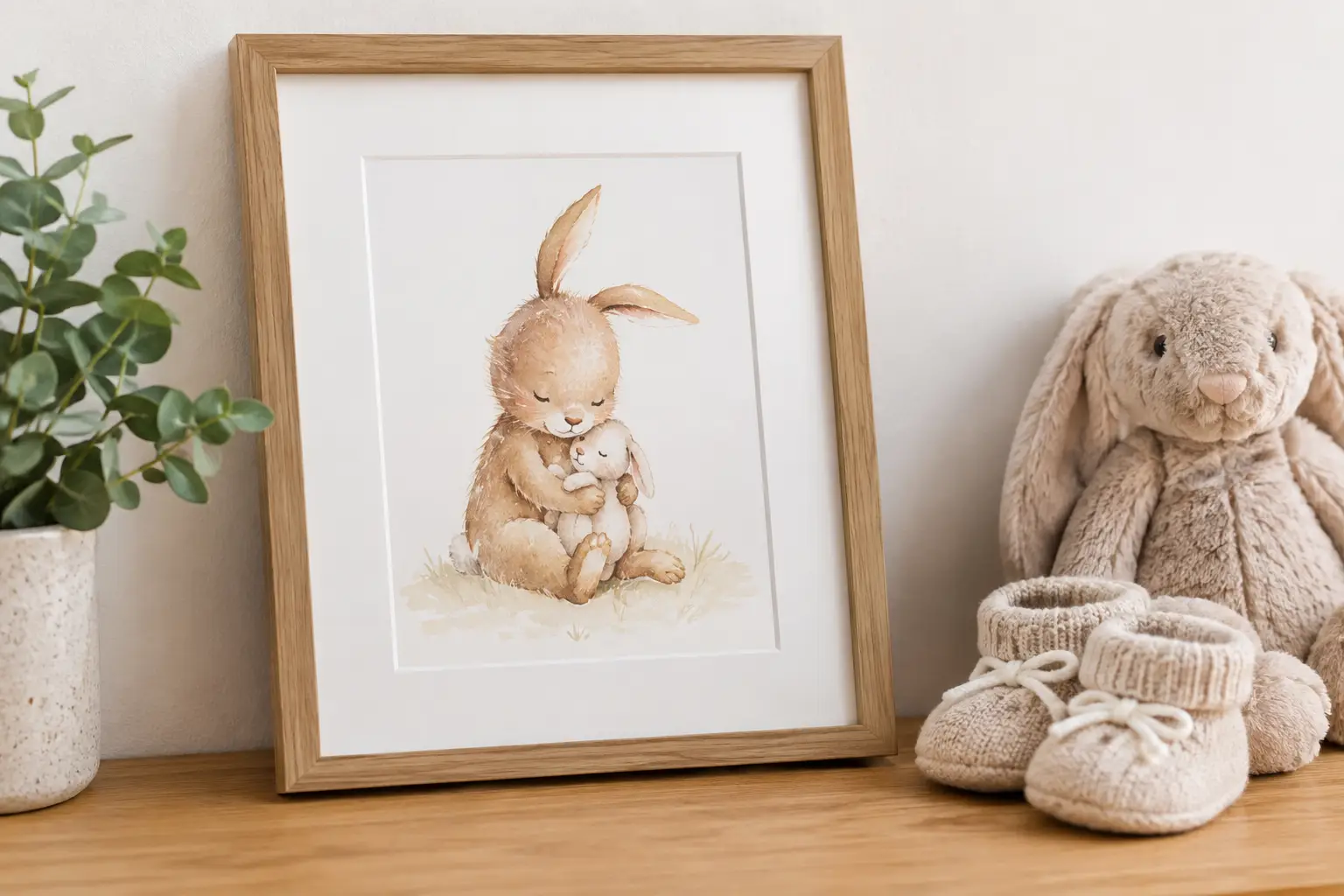
A birth announcement card often ends up on the refrigerator first, then in a box of keepsakes. That’s a shame, because that little card tells a very personal story about a new beginning. With framing birth announcement cards gives that memory a permanent place in your home—subtle, stylish, and made to be enjoyed for years to come.
The best choice is rarely the most eye-catching frame. It’s all about finding the right balance between the card, the materials, and where it will be displayed. A carefully framed birth announcement can easily become a part of the nursery, but it fits just as well in the entryway, on the landing, or among other personal pieces on the wall.
Why Frame a Birth Announcement?
A birth announcement is more than just a notice. The choice of paper, color, illustration, and typography is often carefully considered. Perhaps it features a meaningful name, a drawing of an animal that will later become a favorite, or a photo that perfectly captures those first few days. Instead of storing the card out of sight, framing it turns it into a tangible keepsake.
Framing also protects the card from discoloration, creases, and dust. Cards made of special paper, with embossing, foil stamping, or delicate edges, in particular, deserve a finish that preserves their character. The frame doesn’t have to be overly prominent. A well-chosen frame complements the design and gives the card the attention it deserves.
For many parents, this is also a lovely way to showcase the births of multiple children equally. By framing cards of the same size or with a consistent frame style, you create a cohesive look, even if the designs differ from one another.
Start with the card, not the frame
First, take a good look at what makes the birth announcement card special. Is it minimalist and graphic, does it feature soft watercolor tones, or does it have a bold color? Is the front enough, or does the inside also tell part of the story? Those questions determine which presentation works best.
A card with a refined illustration often looks best in a simple, narrow wooden frame with a generous mat. For a modern design with bright colors, a sleek black, white, or colored frame might be just the right choice. Does the card feature gold foil, a round cutout, or tactile embossing? If so, opt for a understated frame so the details don’t compete with the frame.
Size also plays a role. A small card stands out more with a mat. That extra space around the design creates a sense of calm and makes the piece appear larger, without the card itself getting lost. A border that’s too narrow, on the other hand, can make the whole thing look cluttered.
Show both the front and back together
Sometimes the front features only the name, while the inside contains a poem, birth details, or a personal message. In that case, there’s no need to choose. A double frame with two cutouts can display both sides side by side. This works particularly well with an oblong card or when the front and inside complement each other visually.
Another option is a recessed frame in which the card appears to float in front of the back panel. This creates a more three-dimensional effect and is particularly well-suited for cards made of thick paper, with hand-cut edges, or small embossed details. It does, however, require some craftsmanship: the card must be securely attached without leaving any glue marks, creases, or damage.
The right materials keep the memory beautiful
If you want to keep a birth announcement card for a long time, don’t just choose based on color and style. The material behind the glass deserves just as much attention. Regular cardstock or tape can cause discoloration over time. That’s why acid-free mat board and an acid-free backing are a wise choice. These materials help prevent the paper from turning yellow or becoming brittle.
The type of glass also makes a difference. Standard glass is a great solution for areas with little direct daylight. Is the frame hanging across from a window, in a bright children’s room, or on a wall where sunlight often streams in? If so, glass with UV protection is worth considering. This helps keep the colors vibrant for longer.
Anti-reflective glass can be helpful if you want to view the card at eye level and reduce distracting reflections. The image appears calmer, but this type of glass has a different look and requires careful consideration when working on the piece itself. When creating a personalized frame, it’s therefore helpful to be able to see the materials side by side before making a decision.
Which frame suits your interior?
The
frame
should complement the interior, but it doesn’t have to blend in completely. A birth announcement card is personal and can certainly serve as a distinctive accent. In a warm interior featuring wood, natural fabrics, and soft colors, a frame made of oak, beech, or light ash often looks lovely. For a calm, modern interior, white, black, or aluminum provide a clean, crisp frame.
Does the children’s room have a distinct color palette? If so, you can incorporate a color from the illustration into the frame or mat. Just do so sparingly. A dark blue or sage green frame can look beautiful when it echoes a detail from the illustration, but it can quickly become overpowering if the frame, mat, and wall all contain a lot of color.
If you want to make a timeless choice, you usually can’t go wrong with a neutral frame and an off-white or soft gray mat. It will still look great when the room later transforms from a nursery to a toddler’s room or a study. The memories will simply grow along with it, without having to replace the frame.
A single card or a personalized wall display?
A single, framed birth announcement has a simple, almost graphic look. It can sit on a shelf, hang above a dresser, or be placed next to a family photo. If you’d like to share more, combine it with, for example, the baby’s first hospital bracelet, a small photo, or a print of a hand or foot. A deep frame provides space for such items and turns it into a small keepsake.
In this regard, restraint is often more effective than excessive decoration. Choose one or two complementary elements that are truly meaningful. Too many random items distract from the card itself and make the overall design less timeless.
A series works especially well when you have multiple children. You can choose identical frames with different mats, or frames of the same outer dimensions while giving each card its own pop of color. Hanging the frames at equal distances next to or below one another creates a sense of calm, even when the cards vary in shape and style.
Be mindful of where you hang it
A birth announcement card can be displayed in a nice spot anywhere in the house, but avoid prolonged exposure to direct sunlight and areas with high humidity. A bathroom or kitchen is less suitable due to fluctuating humidity levels. It’s generally better protected in a hallway, bedroom, living room, or children’s room.
Also consider the viewing height. In a child’s room, a frame can be hung lower than in the living room, especially if the card will later become something to look at together. Above a piece of furniture, a distance of about 15 to 25 centimeters often works well, depending on the size. If the card is part of a gallery wall, place the centerline of the composition at a logical viewing height and work from there.
A frame on a shelf or sideboard offers more flexibility. You can easily move it, add other mementos, or switch things up temporarily. Just make sure it’s placed on a stable surface, especially in a child’s room.
Customization Makes All the Difference
Standard frames are convenient when the card fits exactly into a standard size and you’re looking for a simple presentation. However, custom framing is often worth the effort for a card with a non-standard size, luxury paper, or a design you really want to showcase. It is precisely the proportions of the mat border, the depth of the frame, and the choice of glass that determine the final result.
At Amersfoort Art, you can bring a birth announcement card with you to see the various frames, mats, and types of glass in person. That makes choosing easier than relying solely on a photo or color sample. A personal keepsake doesn’t require a complicated decision, but it does call for attention to the details that keep it beautiful.
Be sure to put the card somewhere you pass by regularly. That way, the birth won’t just be a date on a piece of paper, but a little reminder that brings a smile to your face time and time again.


