
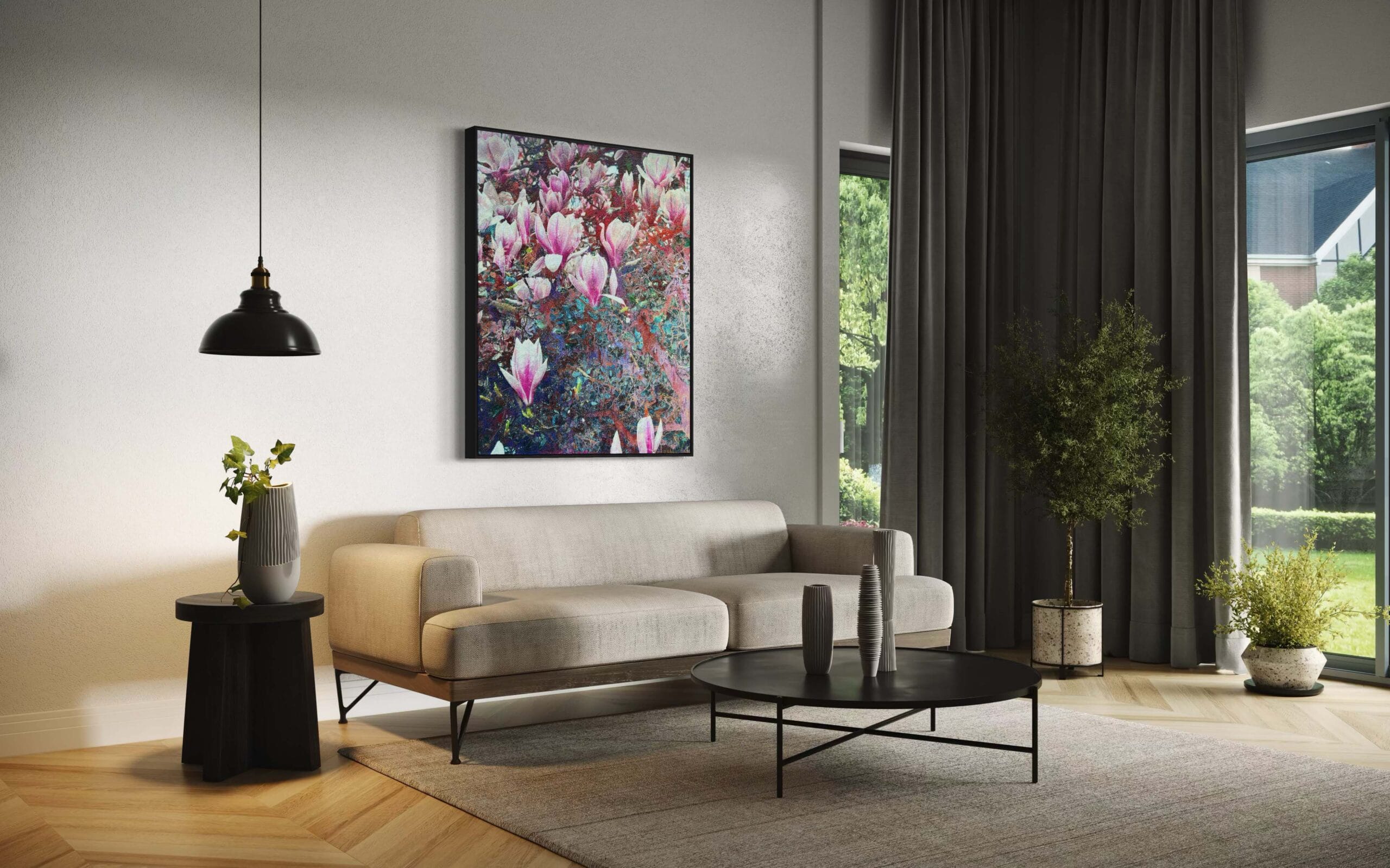
A work of art can instantly add character to a space, but not everyone wants or is able to pay the full purchase price right away. This is exactly why a guide to art loan savings is so valuable. It shows you how to experience art quietly in your home or office first, while simultaneously building toward ownership.
For many people, this is a pleasant middle ground. You don’t have to make a big decision all at once, but you don’t get stuck with just temporarily renting either. Art lending with savings makes the step to owning your own artwork manageable, flexible and often surprisingly feasible.
What exactly does art loan savings mean?
With art lending, you choose a work of art to rent for a period of time. Part of the amount you pay, depending on the arrangement, can be accumulated as savings for a later purchase. You then use that credit to buy the same work, or sometimes another work from the collection.
That makes this construction attractive for those who like art on the wall, but still want to feel if a work really fits. A painting may be beautiful in the gallery, but at home you will only really notice how it works with light, color, furniture and the atmosphere of the room. Renting with a savings option gives you time and direction.
It is also psychologically pleasing. Many people find choosing art more difficult than choosing a piece of furniture or a lamp, precisely because it is personal. Taste often only grows when you live with art. Saving within an art loan gives that development space.
Why an art loan savings guide is useful
Those who first encounter art lending often wonder what the fees consist of and what exactly is saved. That makes sense. Not every provider operates identically, and terms may differ in term, minimum rental period or commitment of the savings amount.
Therefore, a good guide to art loan savings helps not only with the basics, but especially with asking the right questions. How much of the monthly amount do you build up? Can you switch works in the interim? Can the credit go only to one specific work of art, or is it more broadly applicable? And what happens if you prefer to keep renting rather than buying?
Just the latter is important. Art doesn’t always have to come from possession. Sometimes you notice after a few months that you are ready for something else. That’s when flexibility is more valuable than a quick purchase. A good art loan takes both routes into account.
For whom is this form most interesting?
Art loan savings fit well with people who are looking for quality, but want to choose without haste. Think of homeowners who want to give a living room or hallway more individuality, couples who have just moved in and are not yet sure exactly what art will fit their interiors, or business owners who want to make their workspace more groomed and personal.
This is also often a logical step for people who have appreciated art for some time but find the threshold of a direct purchase too high. You don’t have to be a seasoned collector to choose well. In fact, just when you are still orienting, temporary rentals can be very enlightening.
There is a difference between practical and appropriate, though. If you are already sure what work you want and the budget is readily available, buying may be easier. Art loan savings is especially strong if you value choice and like to decide with confidence.
How does it work in practice?
It usually starts very concretely: you choose a work of art that appeals to you. Then we agree on the amount you will pay per month and what part of that will count as savings. During the rental period, the work hangs in your home or business so that you can experience it daily.
Over time, you have several options. You can decide to buy the work using the accumulated credit. You can also sometimes switch to another work, especially if your taste or interior changes. And in some cases, renting simply remains the best choice, for example, if variety is important to you.
The best experience occurs when the arrangement is clear from the beginning. Not just the price, but things like insurance, transportation, exchange and term should be clear. This prevents art lending from feeling complicated, even though it is meant to make art more accessible.
The benefits of renting and saving
The biggest advantage is peace of mind in the selection process. You are not buying based on first impressions alone, but on daily use. That may sound down-to-earth, but it is especially valuable with art. A work that still touches you after weeks often turns out to be a good choice.
In addition, you spread the cost. For many households and businesses, this is simply more practical. You make quality accessible without immediately reserving the entire purchase price. At the same time, you purposefully build toward something permanent, rather than just having a temporary rental expense.
There is also an aesthetic benefit. Because you see art in your own environment first, you often make more confident choices. You see how a work reacts to daylight, to wall color, to a sofa, table or reception area. That provides a different kind of assurance than a quick decision in a showroom.
What should you pay attention to before you begin?
Not every scheme is equally beneficial for every situation. First, pay attention to the ratio of rent to savings. The more transparent that is, the better you can estimate what you are accumulating. Also ask if the savings are tied to one work or freely spendable within the collection.
In addition, look at the quality and breadth of the selection. An art loan is most enjoyable if you have real choice in style, size and price range. Especially if you are still searching, it helps if you can try different directions without having to start all over again.
Service also makes a difference. Personal advice, help in choosing format, delivery and thinking along about presentation are not an afterthought. They often determine whether art really comes into its own in your space. A provider like Amersfoort Art distinguishes itself on that very point: choosing art becomes much easier when guidance feels warm and expert.
Choosing art while saving
A common misconception is that you need to know right away what your final taste is. In reality, it often arises along the way. Perhaps you first think of a colorful abstract work, but at home a quieter, more graphic image turns out to work more strongly. Or just the other way around.
Therefore, it pays to consider not only the artwork itself, but also the function of the space. In a living room, art is often allowed to be more present. In a bedroom, you may be looking for stillness. In an office or reception area, the impression you want to give to visitors or customers also counts.
Format is just as important as style. A small work can be beautiful, but fall away on a large wall. A large work can be impressive but become too dominant in a compact space. Those who rent before they buy notice those kinds of relationships more quickly.
Is art loan savings always the best choice?
Not always. If you mainly want to change frequently and consider ownership less important, then pure renting sometimes makes more sense. And if you already know exactly what work you want and have an immediate budget for it, then buying may be more efficient. Saving via art lending is especially strong for people who want to take time without standing still.
Conditions also matter. Sometimes the arrangement is very flexible, sometimes more strict. That doesn’t have to be a problem, as long as it suits your needs. For example, someone who likes to change every few months has different needs than someone who is looking for one job to live with for years.
So the question is not only whether it is financially attractive, but also whether it suits your way of choosing. Art lives best when the route to it feels pleasant.
A smart way to bring art close
Art loan savings takes a lot of uncertainty out of the process without diminishing the value of art. You are still making a personal choice, but in a form that leaves room for experience, doubt and growing preference. For many people, that’s exactly what makes art accessible.
Those who take the time to look closely, ask questions and really let a work land in their own environment often find that the choice becomes clearer by itself. And just then, art does not feel like a giant leap, but a natural enrichment of the place where you are every day.


