
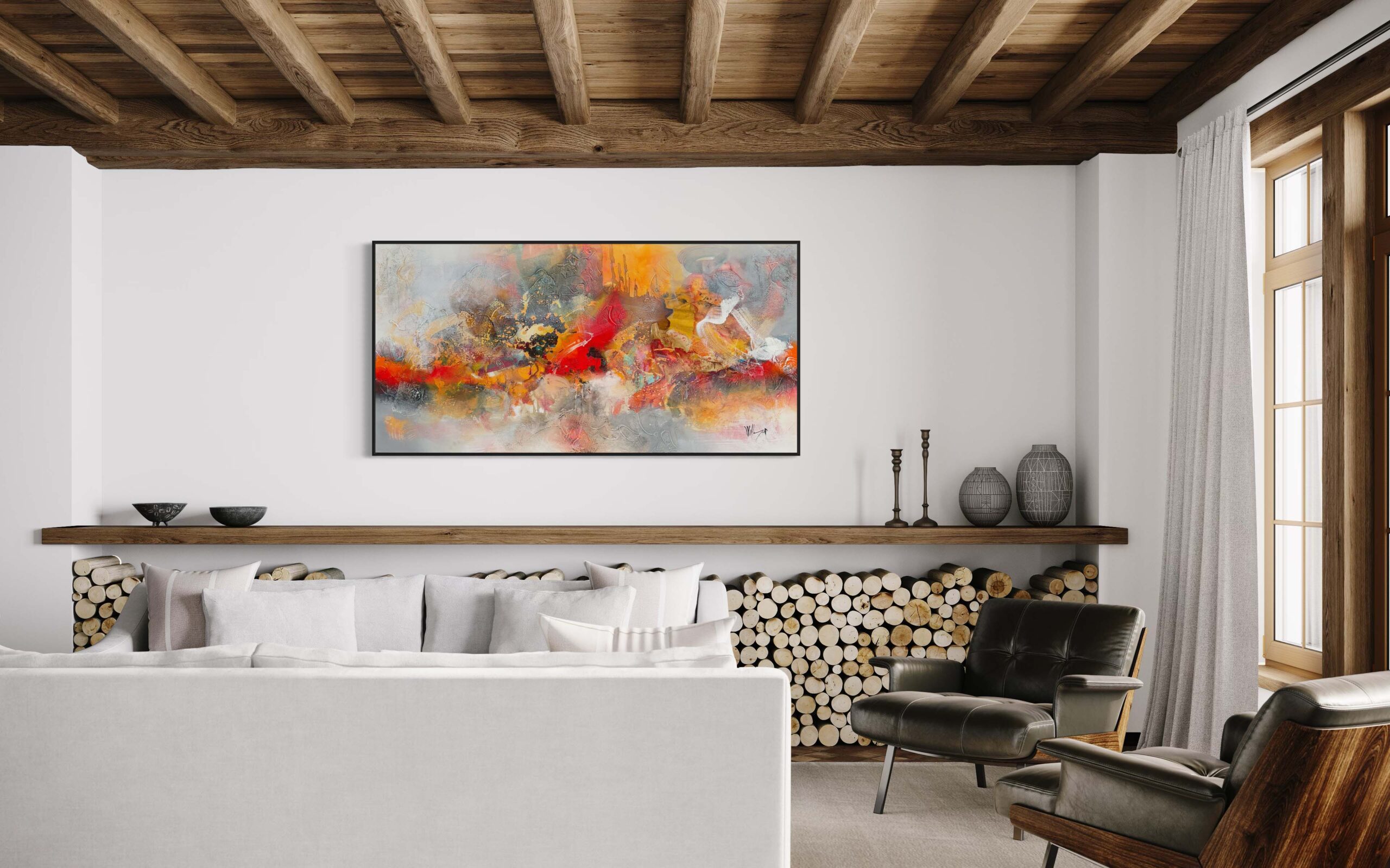
A work of art can instantly make a space feel more like your own, but that doesn’t mean you always want to spend a large sum all at once. That’s exactly where the question often arises: how does art savings work, exactly? The short answer is simple: you build up a balance step by step that you can use later to buy a piece of art, while taking your time to discover what truly suits you and your interior.
For many people, this is a pleasant middle ground. You don’t have to make a final purchase decision right away, but you are taking a concrete step toward owning art. This makes art more accessible, without making it non-committal or vague.
How exactly does art savings work in practice?
Art Savings is essentially a savings plan linked to art. You pay a fixed amount periodically, and that amount accumulates as a credit balance. You can later use that accumulated credit balance to purchase a work of art. Unlike a regular purchase, this allows you to lower the financial burden and spread the costs over a longer period.
This is especially appealing if you’re looking for quality but want to take the time first to see what works best. A painting may look impressive on a gallery wall, but it can sometimes have a very different effect at home. The color, size, and atmosphere need to complement the space where you live or work every day.
When it comes to art collecting, you usually don’t make decisions under time pressure. You collect at your own pace and take your time exploring your options in the meantime. That’s precisely what makes it accessible to many art lovers.
The Difference Between Saving for Art, Renting, and Buying Outright
People often confuse these concepts, which is understandable. They all have to do with owning or experiencing art, but their purposes differ.
When you buy directly, you become the owner right away. It’s straightforward and quick, but it does require an immediate investment. This is a good option if you already know exactly which piece you want and don’t need an intermediate step.
When you rent, you pay for the use of a work of art. This is ideal if you want to switch things up, see how a piece looks in your home first, or if you’re looking to create a professional atmosphere in an office without having to buy it right away. Sometimes, a rental arrangement also includes a savings component, which allows part of your payment to count toward a future purchase.
Art savings fall somewhere in between. You build up assets specifically for art. The focus isn’t on temporary use, but on working toward ownership. That brings peace of mind. You don’t have to force it, but you are saving toward a specific goal.
Why do people choose to save through art?
The main reason is usually simple: flexibility. Art is personal. What you find beautiful shouldn’t just be a good choice on paper—it should also feel right in real life. By saving up, you give yourself the freedom to choose carefully.
In addition, art savings help make high-quality pieces more accessible. A stronger, larger, or better-known work is sometimes just slightly beyond the amount you’re willing to spend right away. With a savings plan, such a purchase becomes more realistic, without having to compromise on taste or craftsmanship.
From a practical standpoint, this also means you’ll develop a more discerning eye. People who save up for art often view it more consciously. You’ll pay closer attention to style, technique, use of color, and size. That may sound obvious, but it helps you avoid impulse purchases that you’ll be less happy with later on.
For business clients, there’s something else to consider. In a workspace, art should not only be beautiful, but also complement the company’s image, its visitors, and the surrounding environment. It’s helpful to have a process that allows you to build up your selection, compare options, and make a decision only when everything comes together.
How exactly does art saving work if you don’t know what you want yet?
That’s actually a very common situation. In fact, many people start building an art collection before they’ve chosen a specific piece. So you don’t have to know everything for sure right away.
It often starts with a feeling. For example, you might know that you want to fill an empty wall, that your living room could use more character, or that your office needs to look less generic. Maybe you’re drawn to abstract art, or perhaps figurative art, photography, or a sculpture. It doesn’t have to be clearly defined at the beginning.
As you build your collection, your perspective often evolves naturally. You see more works, compare styles, and notice which pieces you keep coming back to. That process is valuable—not because art has to be complicated, but because a well-chosen piece can last for years.
That’s exactly why a personalized approach often works well. A gallery or art lending service that works with you to consider size, color, and placement helps you feel more confident in your choice more quickly.
What should you keep in mind before you start?
Not every plan is exactly the same. That’s why it’s a good idea to clarify a few practical details in advance. How much is the monthly payment? Is it fixed or flexible? Can you adjust it partway through? And exactly what can the accumulated balance be used for?
Also pay attention to the collection. Saving up makes the most sense when the selection matches your taste and budget. A broad, carefully curated collection increases the likelihood that you’ll eventually find a piece that truly suits you, rather than choosing something simply because you’ve saved up for it.
In addition, guidance is more important than many people realize. You don’t choose art the same way you choose a standard product. You want to be able to discuss the space, the size, the aesthetic, and sometimes even framing or presentation. Especially if you’re considering a more serious work of art for the first time, expert and down-to-earth advice makes a big difference.
The benefits, but also the considerations
Art saving has clear advantages, but it’s also important to consider the other side of the coin. The biggest advantage is the combination of peace of mind and direction. You save with a specific goal in mind, without the pressure of an immediate large expense. That makes the step toward owning art a little easier.
A second advantage is that you often have more leeway to prioritize quality. Instead of quickly settling for something that fits within your immediate budget, you can work your way toward a job that truly excites you.
At the same time, saving for art requires patience. If you already know exactly which piece you want today and can purchase it right away, saving isn’t always the most logical approach. It’s also wise to be realistic about the pace. Anyone with their eye on a higher-priced piece should be prepared to save up for it over a longer period of time.
So it depends on your situation. If you want flexibility, time to choose, and a manageable monthly contribution, a savings plan is often a good fit. If you want to decide and finalize things right away, buying outright is the more obvious choice.
Who is the art savings plan best suited for?
For private art enthusiasts, collecting art in small increments is an attractive option if they want to enhance their home décor without having to set aside a large sum of money right away. This applies to first-time collectors with good taste, but just as much to people who have been collecting art for some time and want to expand their collection gradually.
It can also be appealing to gift-buyers. Not everyone wants to buy a large piece of art all at once, but they do want to work toward a special and lasting gift.
For businesses, this is a logical choice when image is important but they prefer to spread out their investments. A reception area, conference room, or office wall calls for art that adds something special. In such cases, a flexible approach to purchasing is often more practical than a quick, one-off decision.
At a store like Amersfoort Art, this aligns well with how many customers shop: first they look, experience, and compare, and only then do they decide what really suits the space.
How can you get the most out of art savings?
Start not only with a budget, but also with a space. Consider where the artwork will be placed and what role it will play there. Should it be understated, or should it be an eye-catcher? Should it add warmth, create contrast, or convey professionalism? Questions like these are more helpful than simply thinking in terms of styles.
Also, be sure to bring photos and measurements with you when you come in for advice. A piece that looks perfect in the gallery might be too small—or, conversely, too overwhelming—in your home. Good guidance helps prevent second thoughts later on.
Give yourself time to reconsider your choice. The pieces that stick with you are often the right ones. Taste is personal, but it’s also surprisingly consistent. What still appeals to you after a few weeks usually suits you better than something that only made an impression at first glance.
And don’t forget the finishing touches. A suitable frame, proper placement, and good lighting make a noticeable difference. Especially with contemporary art, presentation isn’t just a detail—it’s an integral part of the whole.
How exactly does art saving work if you want to start small?
That’s usually when it works best. You don’t have to think big right away. A smaller project, a first purchase, or a modest monthly payment can be enough to gain some experience. The advantage is that you can figure out what works for you without the step feeling too big.
Many art lovers don’t start with their dream collection, but with a single piece that fits just right. From there, the confidence to explore further often grows naturally. Art saving supports that process, because it’s not about rushing, but about building a collection in a focused way.
So if you want to bring art into your home or office, you don’t have to wait for the perfect moment or the perfect budget. Often, it simply starts with the decision to make room for something that adds a little something to your day.


