
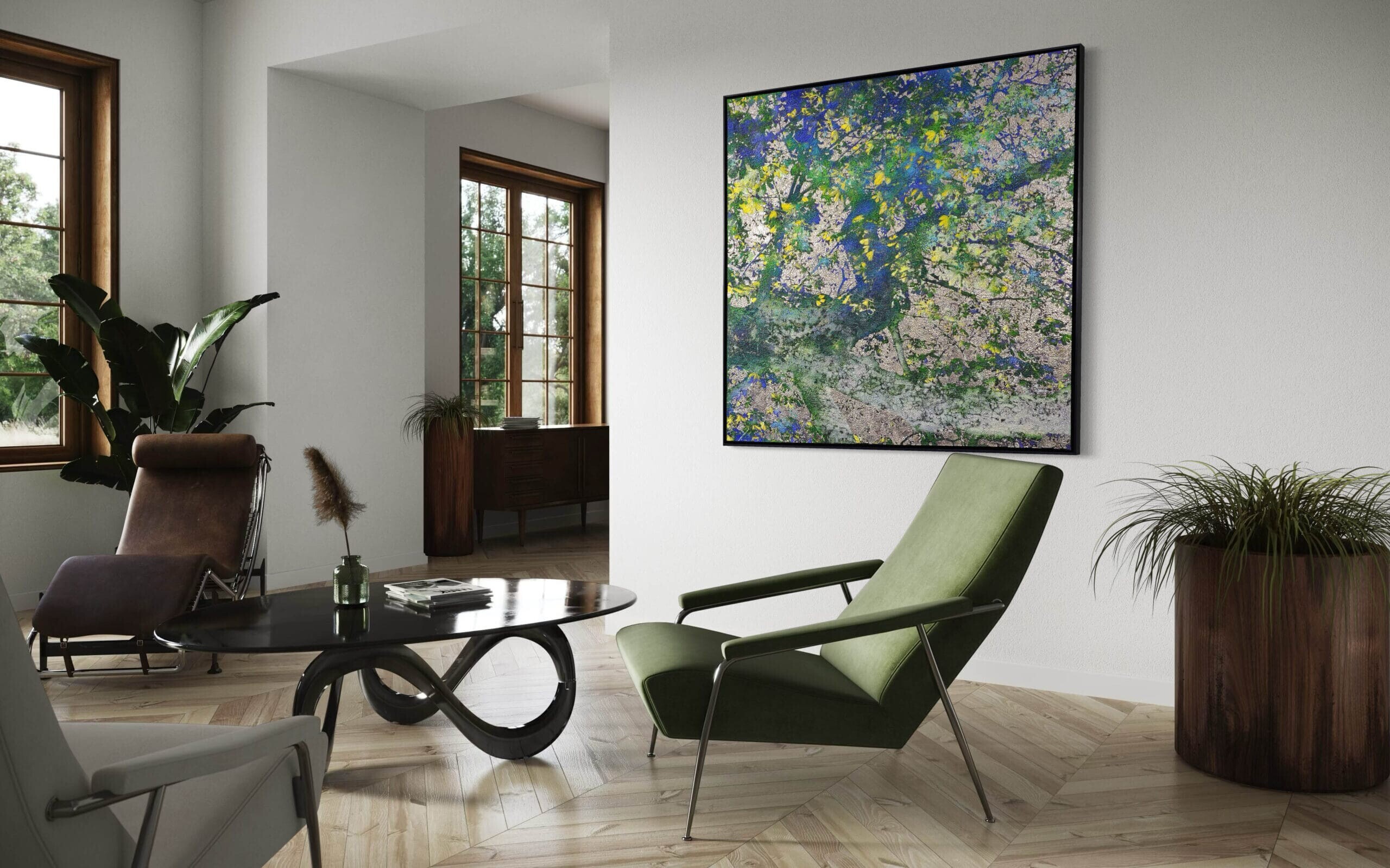
A work of art may feel instantly right in a gallery, but sometimes it works differently at home or in the office. This is precisely why the question of when is art lending advantageous is so relevant. Not just financially, but also practically: you’re less likely to buy something you later get tired of and you keep room to first experience what a work does to a space.
When is art lending beneficial for individuals?
For many individuals, art lending is especially attractive when there is an interest in art but no need for an immediate, large purchase yet. This is true, for example, if you have just moved house, are rebuilding an interior or are unsure between different styles. In such a phase, renting is often wiser than buying right away, because you can first see whether a painting, photograph or graphic work really suits the lighting, furniture and atmosphere in your home.
The advantage then is not just in lower entry costs. The real advantage is that you buy time to make a good choice. Art lives with a space. A work that looks powerful in a sleek living room may actually become too much in a warm and busy interior. By renting, you avoid making a hasty decision.
Art lending is also advantageous if you want quality on the wall without spending a large amount of money all at once. For many people, this feels more comfortable and realistic. You spread the cost, but get something special in your home right away. That makes art more accessible, especially if you already know you value charisma, but are not yet sure which work will suit you for a long time.
Advantageous if you want to experience first
Some works of art become more beautiful the longer you live with them. Others, on the contrary, do not. This is not a disadvantage, but valuable information. Those who want to experience first benefit most from art lending. You will notice after a few weeks or months whether a work continues to fascinate you, or if you feel the need for something else.
This freedom is especially advantageous for people who take their interiors seriously. Not because everything has to be perfect, but because art is more than filling a blank wall. It defines rhythm, color, tranquility or tension in a room. Then it’s nice if you can try out instead of guessing.
Beneficial to changing housing needs
Even if your tastes are evolving, art lending can be smart. Perhaps you like colorful work now, but find that later you gravitate more toward minimalist art. Or you may want to change seasonally. In cases like that, owning is not always the best first step.
Renting then provides flexibility without compromising on quality. Especially with contemporary art, this is attractive because you can keep renewing without making a complete purchase each time. For people who like variety, art lending is often more economical than a series of individual purchases that later prove less appropriate.
When is art lending beneficial for businesses?
For corporate clients, the benefit is often even more obvious. An office, practice space, reception area or meeting room requires appearance, but that appearance may also be functional. Art helps make a space more cared for, more human and more professional. Yet buying directly does not always make sense, especially if a company is growing, moving or updating its furnishings regularly.
In those situations, art lending is advantageous because it combines flexibility with representativeness. You can bring a space up to par immediately without a large upfront investment. That’s nice for companies that value quality but want to use budgets smartly.
In addition, maintenance of the look plays a role. A work that hangs on the same wall for five years can be familiar, but it can also become invisible. Renting creates the opportunity to change from time to time. This keeps a space fresh and in keeping with the company’s identity.
A smart choice when growing or remodeling
Companies that are expanding or remodeling often have enough big expenses already. That’s exactly when art lending is interesting. It adds atmosphere and professionalism while keeping you financially nimble. If departments shift or spaces are used differently, an art collection does not have to be fixed right away.
This often makes renting more practical than buying. You avoid works ending up in the wrong place or investing in art that won’t do as well after redecoration. So the advantage here is in adaptability.
For reception areas, the first impression counts
In a business environment, art is rarely a detail. Visitors see it immediately. It supports the appearance of your organization and demonstrates attention to environment and presentation. For a waiting room, boardroom or entrance hall, art lending is therefore often an efficient way to make quality visible without a long-term commitment to one specific choice.
When is art lending less advantageous?
An honest answer to the question of when is art lending advantageous also requires the opposite. Renting is not the best solution in every situation. If you are already very sure which work of art you want, if you are just collecting for the long term or if you see a work primarily as a purchase for permanent possession, then buying directly may make more sense.
Even if you have little need to change and mainly want to make one final choice, renting sometimes pays less. Then you are paying for flexibility you don’t actually use. So economical is not automatically the same as cheap. What matters is the relationship between cost, use, security and enjoyment.
For collectors who want to build a focused body of work, purchase will more often be more appropriate. For those still orienting, wanting to try or quietly spread out the investment, it is different. It depends very much on your goal.
The role of saving and advancing to purchase
One of the strengths of art lending is that renting and buying need not be mutually exclusive. That very middle ground makes it advantageous for many people. You start low-key, get to know your tastes better and then can move on to a purchase that really feels right.
This is an important difference from impulsive buying. Those who rent first often make more conscious choices. You see how a work lives in the space, how often you look at it and whether it will continue to fit in the long term. If a savings component is also possible, the step to ownership becomes even more attractive. Then renting is not just temporary use, but a way to work toward ownership in a focused way.
For clients who seek quality but want to decide wisely, that’s often exactly where the value is. Not everything has to be immediate. Sometimes the best purchase is the one you grow into quietly.
Where is the real benefit of art lending?
The real benefit is rarely in one factor. Art lending is advantageous when several things are important at once: limited entry fees, flexibility, the ability to switch, the chance to experience first and guidance in choosing. Especially with art, this is not a luxury. A work should not only be beautiful, but also right in scale, color, material and atmosphere.
That’s why art lending works especially well for people who are serious about looking at their interiors or workspace, but don’t want to make an overnight purchase. It lowers the threshold without lowering the quality. And that makes it a surprisingly strong solution for many households and businesses.
At Amersfoort Art we see that clients often come in with one question and leave with more peace of mind. Not because art is made complicated, but precisely because good advice, flexibility and an appropriate choice remove a lot of uncertainty.
When is art lending advantageous? Ask yourself this question
Perhaps the best way to assess it is quite simple: do you want art on your wall now, but not yet committed to a final purchase? Then art lending is often a logical and economical step. Especially if you value quality, atmosphere and the convenience of being able to choose quietly.
Those who give art the space to first become part of everyday life often find what fits naturally. And that is often where the most beautiful choices begin.


