
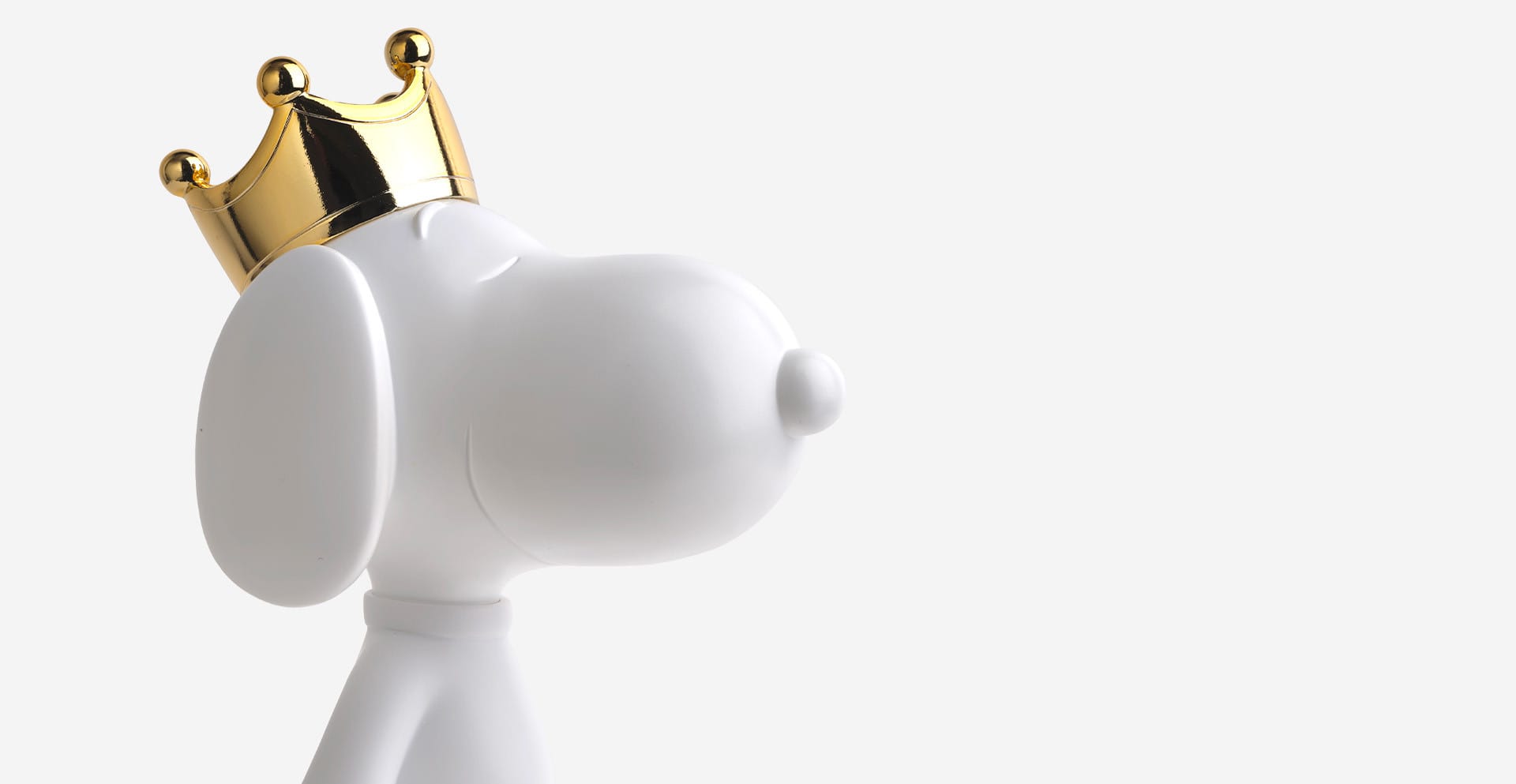
Those who search for leblon delienne point of sale are usually not just looking for a store address. Often it’s about something more concrete: an original image of a beloved character, assurance of authenticity, a beautiful presentation in the home and the confidence that you will be well served with a purchase that is as much about taste as it is about value.
Leblon Delienne appeals to a special group of collectors and interior design enthusiasts. The objects sit at the intersection of design, pop culture and art. That makes the selection fun, but also a little less casual. You are not just buying a decorative object, but often a limited edition with a clear signature, finish and collector’s value. This is precisely why it pays to look critically at where you buy.
What do you look for at a Leblon Delienne outlet?
A good Leblon Delienne outlet is distinguished not only by what is in stock. At least as important is the way the offerings are presented and explained. With these objects, details make the difference: use of materials, edition information, condition, dimensions and whether a work fits well in a home, office or collectible presentation.
A sales outlet that focuses only on quick sales often misses opportunities. Instead, you want a party that can explain why a particular piece is special, how an edition works and what a logical place is in your interior. Especially with larger or distinct images, this is not a luxury, but part of a good buying experience.
Service around the purchase also counts. Think of careful transport, advice on placement and a neat presentation. A sculpture by Leblon Delienne only really comes into its own when scale, color and surroundings are right. In a minimalist interior, a powerful statement often works very well, while in a warmer, eclectic space a more subtle or playful piece works better. This is not a question of right or wrong, but of choosing appropriately.
Leblon Delienne outlet and authenticity
With design objects and collectibles, authenticity is a logical concern. Those considering a Leblon Delienne sale point would do well to pay attention to provenance and documentation. Many buyers want to know if an object is part of a limited series, if it is numbered and how the condition of the work is described.
This may sound technical, but it is mostly practical. You don’t want to doubt afterwards whether you bought an original work, or discover that information about edition and condition was incomplete. A reliable provider is clear about this. Not vague, not complicated, just clear.
For collectors, that counts extra heavily. For interior buyers, too, for that matter. Even if you are mainly in love with the look of a sculpture, it is still nice to know exactly what you are getting. That certainty gives peace of mind and makes it easier to choose with conviction.
Not just for collectors
There is sometimes still the idea that Leblon Delienne is of interest mainly to avid collectors. That is only part of the story. It is precisely in interiors with character that these objects can work surprisingly well. They add personality, bring a wink to an austere space or form a distinct accent between modern art and design furniture.
There’s an immediate trade-off there, too. An iconic figure or striking object attracts attention. That is often exactly the intention, but it requires balance. In a quiet interior, one strong work may be sufficient. In a more layered space, on the other hand, you can play with combinations of art, graphics, photography and sculpture.
Those in doubt usually benefit from tailored advice. Not only about taste, but also about size, sightlines and light. An image that seems perfect online may appear much more dominant than expected in a smaller space. Conversely, a work in a spacious hall or reception area may actually come out stronger than it appears in a product photo.
What really makes a purchase successful?
A successful purchase rarely begins with price alone. Of course budget is a factor, but with Leblon Delienne the main question is: does this object fit the way you live or work? A sculpture can be fantastic, yet land less well if the scale isn’t right or the surroundings are too busy.
That’s why context is so important. You look at an object differently in a home than in a conference room, lobby or executive office. At home, an image may be personal, playful or nostalgic. Business is more likely to look for something that evokes conversation without being overpowering. Both are possible, as long as the choice is made consciously.
A good sales outlet thinks about this. Not coercively, but helpfully. Sometimes the best advice is even to wait a little longer or consider a different format. That may sound less commercial, but often results in a better decision. And exactly that gives confidence.
The difference between online orientation and physical viewing
Searching online for a leblon delienne outlet is often the first step. Understandable, because you want to quickly see what styles, ranges and price points are available. Yet a screen never tells the whole story. Finish, depth, shine and color effects often come across differently in real life.
This is especially true of sculptural objects. The front view is only one side of the work. The roundness of a form, the relationship between pedestal and object and the way light falls on the surface help determine its appearance. Those who have the opportunity to physically view a piece often notice more quickly whether there really is a click.
This does not mean that online orienteering has less value. On the contrary. It helps to sharpen preferences and ask more specific questions. But for a purchase in this segment, personal guidance remains a great advantage. Especially if you are in doubt between several works or want to assess which image best fits your interior.
For home, office or as a special gift
Leblon Delienne is often bought for one’s own collection or interior, but it can also be very strong as a gift. Then the choice has to be just right. A gift in this category requires feeling for the recipient: does someone like design, pop culture, limited editions, or especially outspoken objects with humor and quality?
For business relationships, the bar is a little different. Then representation comes into play. You are looking for something that exudes quality and is memorable, without feeling arbitrary. In that case, it helps if a point of sale can think along about appearance, packaging and the context in which the object is given or placed.
A gallery or art specialist with a wider selection can offer extra value. Not because everything has to go at once, but because an image is then viewed as part of an overall presentation. Sometimes a separate object fits perfectly. Sometimes it looks better next to a work of art on the wall or in combination with an appropriate frame, pedestal or place in the room. At Amersfoort Art, this broader view is naturally part of the advice.
Here’s how to recognize a point of sale that suits you
The best Leblon Delienne outlet is not the same for everyone. Some want speed and availability above all, while others seek substantive advice and pleasant guidance from orientation to installation. Both desires are understandable.
Yet there is one common denominator: clarity. You want to know what is available, what you are buying, what condition it is in and what service you can expect. When that is well organized, you buy with more peace of mind and pleasure.
Also pay attention to a provider’s tone. With special properties, you want to be taken seriously but not overwhelmed with jargon or aloofness. Good guidance feels knowledgeable and approachable at the same time. Exactly that makes the difference between just ordering something and really choosing well.
Those who calmly orient themselves, ask questions and look at authenticity, presentation and service, usually make the best choice. Not necessarily the fastest, but the most appropriate. And especially with an object that may be visible every day, that is ultimately the most pleasant.
If a work by Leblon Delienne sticks with you after you see it, that’s often a good sign – then it’s not an impulse, but a piece that really adds something to your space.


