
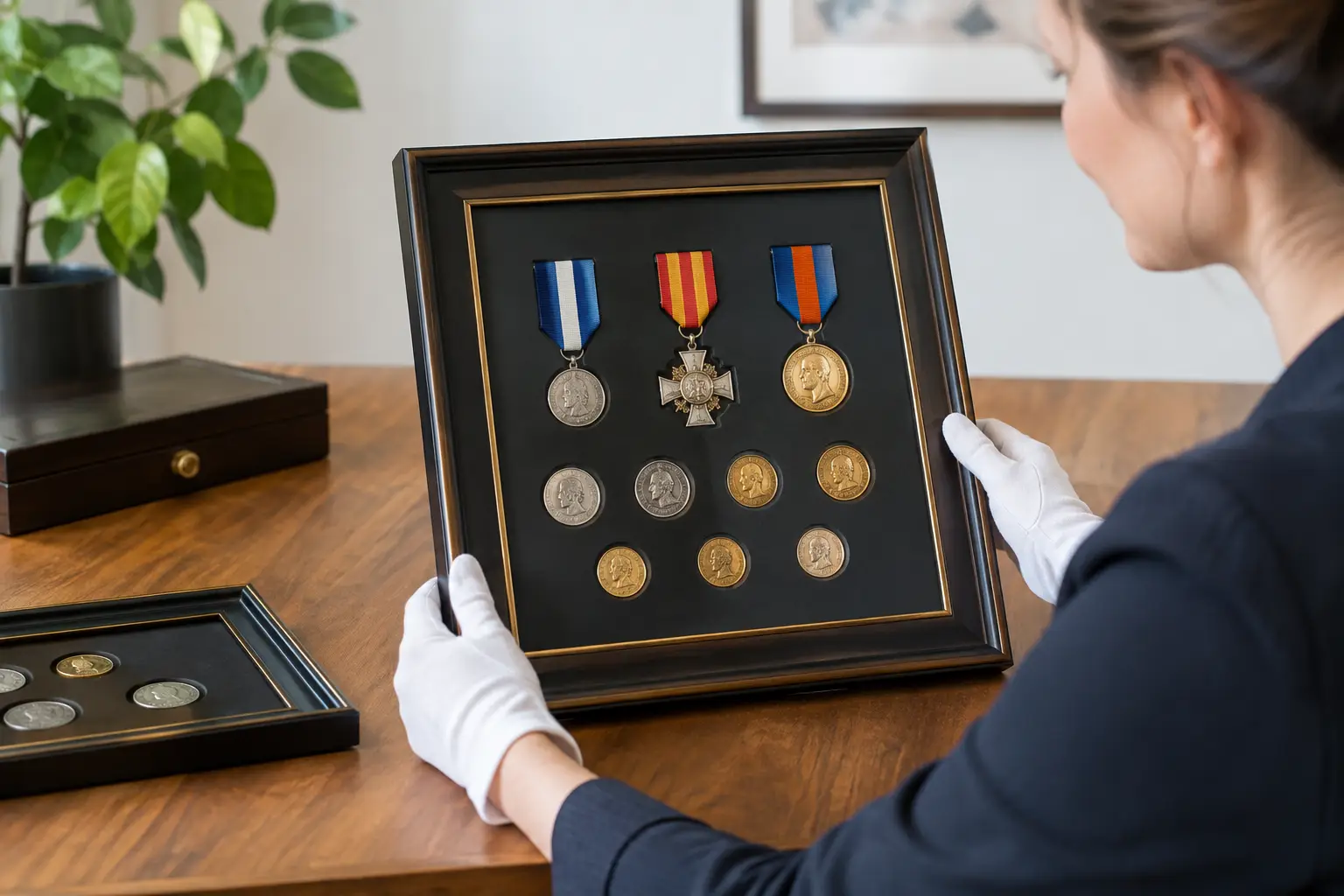
A medal from military service, a sporting achievement, an anniversary, or a collectible coin tells a story that goes beyond what’s engraved on the metal. By framing medals and coins, you give these items a permanent home while better protecting them from dust, discoloration, and unnecessary damage. However, a beautiful presentation requires different considerations than framing a photo or print. Weight, thickness, material, and sentimental value all deserve attention.
Why Frame Medals and Coins?
When stored loose in a box, album, or drawer, medals and coins remain out of sight. That’s a shame when they’re connected to a special person, event, or collection. In a carefully chosen frame, they become a personal item on the wall or a meaningful gift for the next generation.
The practical considerations are just as important. Metal can react to moisture, air pollution, and materials that release acids. Old coins, silver awards, and medals with a delicate patina, in particular, require a calm, stable environment. A good frame keeps dust out and prevents objects from rubbing against each other. At the same time, you can still choose a presentation style that complements your interior: understated and classic, or bright and contemporary.
However, framing isn’t automatically the best choice for every coin. A collection that you want to view, add to, or have appraised frequently is sometimes better kept in a coin display system designed for that purpose. Furthermore, if a coin has high numismatic value, have it assessed in advance to determine which mounting method is appropriate. The rule is simple: the presentation should never come at the expense of the object itself.
First, decide what the story should be
A display is most effective when not only the objects themselves but also the relationships between them are visible. A single medal with a ribbon calls for a different composition than a set of twelve awards or a collection of historical coins.
So first, think about what someone should see when they stand in front of the display. If it’s a sports career, the medals can be arranged in chronological order, perhaps with a race number or photo included. For a family heirloom, a small nameplate, a date, or a brief explanation can clarify its significance. For a coin collection, a simple arrangement by country, time period, or motif often works best.
A text card can add value, but keep it simple. The medal or coin should remain the focal point. Choose a font that’s easy to read and limit the text to what’s necessary: the name, occasion, and year are often enough.
Medals with a ribbon, pin, or relief design
A medal with a ribbon needs space. When the ribbon is pressed flat behind glass, its natural drape is lost, and the material may eventually be subjected to unnecessary strain. A deep frame, also known as an object frame, offers a solution. The medal then rests or hangs freely from the glass, with sufficient depth for the ribbon and the relief.
The fastening method also deserves attention. Sticking a pin or metal wire directly through a delicate ribbon is rarely advisable. A better option is a discreet, reversible system that supports the object without leaving any permanent marks. For heavy decorations, sturdy, distributed support is necessary so that the weight does not pull exclusively at a single point.
Currencies Call for Caution
With coins, it’s very tempting to give them a thorough cleaning first. It’s best not to do that. Natural discoloration or patina can be part of a coin’s authenticity and sometimes even its collectible value. Scrubbing, polishing, or using harsh cleaning agents can easily leave permanent marks.
The coin should not be glued into the frame. Mounting it using a suitable coin holder, a recessed area, or a discreet fastening system is safer and is usually reversible. Especially in the case of rare or valuable coins, it is wise to first place the coin in a protective, suitable holder and then incorporate that holder into the display.
Choose materials that both protect and fit well
The background plays a major role in determining the overall look. Velvety fabrics lend a ceremonial feel and beautifully highlight gold- or silver-colored metal. Linen, suede-textured cardstock, or a subtle museum-grade cardstock often look more modern and prevent the presentation from appearing too heavy. A dark background emphasizes shine and texture, while a light background can create a fresh, graphic effect.
Beautiful materials aren’t necessarily safe materials. It’s best to choose acid-free mat board and a backing that doesn’t release harmful substances. This is especially important if the object will remain in the same frame for a long time. Avoid regular cardboard, old types of foam, and adhesives that come into direct contact with metal, fabric, or paper.
The type of glass is also a consideration. Standard glass is suitable when the frame is not hung in bright light. For a valuable collection, ribbons prone to discoloration, or a location near a window, UV-protective glass is a wiser choice. Anti-reflective glass produces a calm image, especially when the frame is hung opposite a light source. The difference is immediately noticeable, but these types of glass are generally more expensive. For a large-format piece or a frame in a high-traffic area, acrylic glass can be a lighter and safer alternative, although it is more susceptible to scratches.
The right depth makes all the difference
A common mistake is choosing a standard picture frame for an object with a raised surface. If a medal, coin, or pin comes into contact with the glass, pressure can build up due to movement, temperature changes, or when the frame is hung. With a custom-framed display, a small, safe distance is maintained between the glass and the object.
That depth also allows for a more compelling design. For example, you can place a coin collection in a recessed mat, while a medal stands out slightly. Creating different levels adds shadow and vibrancy without making the display look cluttered.
The frame itself doesn’t need to be overly prominent. A sleek black or natural wood frame complements a modern display. A warm wood frame pairs well with historical coins and family heirlooms. Metal-colored frames can complement silver or bronze nicely, but be careful that they don’t compete with the object itself. The best choice depends on the story, the wall, and the room where the frame will be hung.
That’s how you create a presentation that makes sense
Take the time to first lay out the composition loosely or sketch it digitally. Measure all the objects, including ribbons, pins, and any documents. Leave plenty of empty space around them. Too many objects in a small frame make the composition difficult to read, while a generous size gives it breathing room.
When displaying a series of medals, spacing them evenly usually works better than a completely symmetrical arrangement. After all, not every medal has the same shape or ribbon. Highlight the original hierarchy, if there is one—for example, by placing a primary award slightly more centrally. For coins, a neat grid provides clarity, but a single special coin can certainly be given its own position.
Before final installation, always check that all text is correct and that the items are hung straight. This may seem obvious, but in the case of a personal or historical display, an incorrect year or an upside-down medal can detract from the overall effect.
When should you choose a professional framer?
A simple sports medal can sometimes be displayed perfectly well at home. For items with emotional, historical, or financial value, professional advice is often the safest choice. A framer can not only handle the design but also assess which mounting method, depth, and materials are appropriate. This prevents you from later discovering that a ribbon has been pinched, a coin has been damaged, or a heavy medal has started to sag.
At Amersfoort Art, we can create a custom display tailored to both the object and your interior. Please bring the medals, coins, and any additional items, such as a photo, certificate, or name tag. Together, we’ll determine which elements truly enhance the display and which are best left out of the frame.
Do not hang the finished frame in direct sunlight, directly above a radiator, or in a damp room. Choose a sturdy wall and use a hanging system that can support the weight. This will ensure that the display looks great not only on the day it is hung, but for years to come.
A framed medal or coin doesn’t have to be a distant museum piece. In fact, when the finish is carefully chosen, a personal memento takes pride of place in your home or office—ready to be seen and to let a story begin anew.


