
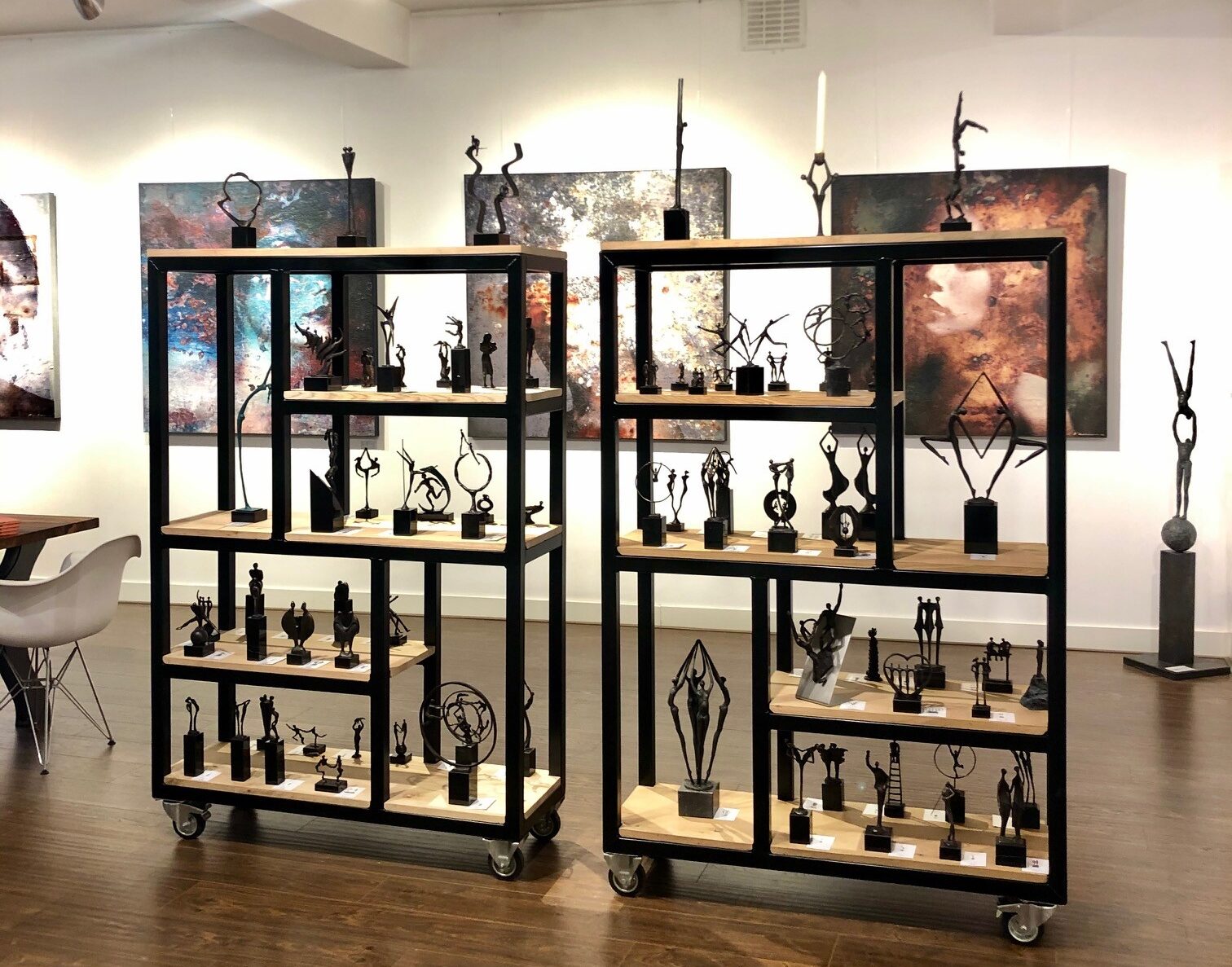
Some images do not ask for attention, but get it automatically. That is often the effect with Ger van Tankeren’s sculptures. They have presence without being loud, and that is precisely why they work so well in a living room, entrance hall, bedroom or business space where atmosphere and appearance have to match together.
Anyone looking for a sculpture soon finds that form alone is not enough. A work must also fit the place, the light and the way you live or work. With sculptures by Ger van Tankeren it is therefore not only about what you see, but also about what a work does in a space. That makes the choice more personal than many people think beforehand.
What makes Ger van Tankeren images so recognizable?
Ger van Tankeren’s sculptures are often appreciated for their clear language of form and balanced appearance. There is tranquility in the work, but rarely dullness. It is precisely this field of tension that makes it interesting for people looking for art that does not scream, but remains captivating.
In an interior, this works strongly. A sculpture with a clear line or compact mass can give a space hold. Where a painting often becomes part of the wall, a sculpture literally stands in the space. So it demands something different from its surroundings. It influences sightlines, walking routes and the perception of a corner, niche or table.
This is also why art lovers often dwell longer on a sculpture than on a work on the wall. You don’t just look at it, you move around it. It changes with the daylight and with your point of view. A good sculpture therefore continues to surprise you, even if it has been in the same place for months or years.
Ger van Tankeren images in the home or office
Buying a sculpture is rarely a purely theoretical decision. In the gallery, a work may touch you immediately, but at home or in the office it must also function. The scale, the background and the space around it are at least as important as the sculpture itself.
In the living room
In living spaces, an image often works best when it is given air. That doesn’t mean you need a large room. A sculpture can also do a lot in a more compact interior, as long as it is not pushed away between accessories, plants and furniture. One strong work with space around it usually makes more of an impression than several objects close together.
Also pay attention to height. A sculpture on a pedestal or sideboard is experienced differently than a work on the floor. At eye level, you look more for detail and expression. Images placed lower often have more mass and presence. What works better depends on the shape of the work and where you want it reflected.
In an office or reception area
Business spaces require a slightly different approach. There not only your personal taste counts, but also the appearance to visitors, customers and employees. Ger van Tankeren’s sculptures can come into their own here because they add character without making a space restless.
In an entryway, an image can make a clear welcome. In a conference room or boardroom, on the other hand, a quieter, focused work often works better. It should be present, but not distracting. So art in a work environment requires balance. That sounds simple, but in practice it is precisely that nuance that makes the difference between decoration and a convincing choice.
What do you consider when choosing an image?
Those buying a sculpture for the first time often look primarily at style. This is logical, but not enough. A well-chosen sculpture suits not only your taste, but also the scale of the space, the materials used in the interior and the atmosphere you want to set.
Material plays a big role in this. A sculpture with a closed, solid look does something different than a work that looks open and rhythmic. The finish also counts. Dark tones often give weight and depth, while lighter or more reflective surfaces can have a more spacious effect. So it depends on the place and what you are looking for – tranquility, tension, contrast or just a unifying element.
In addition, it’s smart to pay attention to sightlines. From which side do you see the sculpture most often? Is it meant to be an eye-catcher as you enter, or just a subtle presence that gradually stands out? Not every sculpture needs to take center stage. Sometimes a work will look better in a quieter corner, where form and shadow are given more space.
The difference between liking and placing well
That distinction is often underestimated. A sculpture can be beautiful on its own, but lose its power in the wrong place. Conversely, a work that seems modest at first can suddenly balance everything out in just the right place.
That’s why looking in context is so valuable. Consider the color of the wall behind it, the floor, the incident light and the furniture around it. In a sleek interior, an organic image can bring softening. In a warm, richly decorated home, a more clean form can actually bring calm and direction.
Those who have doubts do not have to make a final decision right away. Especially with art, orientation is allowed to happen quietly. Sometimes it helps to go through different places in your mind or to first determine what feeling you miss in a space. Do you want more peace, more tension, more refinement or just a stronger focal point? Once that is clear, choosing an image usually becomes much easier.
Why images often last longer in your experience
A painting you usually see frontally. A picture lives differently. It changes with the time of day, with the position of the sun and with how you move through space. This keeps the work actively present in your environment without being obtrusive.
For many art lovers, this is exactly the reason for choosing a sculpture in addition to wall art. It brings an extra layer to the interior. Not as padding, but as a spatial element with its own rhythm. That is also why sculptures are often so popular as a lasting purchase or as a special gift for an anniversary, opening or personal milestone.
Ger van Tankeren’s sculptures have a pleasant quality in that respect. They combine well with different interior styles, from modern and minimalist to warmer and more classically decorated. Not because they do the same thing everywhere, but precisely because they allow themselves to be read differently for each space.
For whom are Ger van Tankeren sculptures a good choice?
They fit well with people who like modern art with clear form and quiet strength. You don’t have to be a seasoned collector to have a thing for them. Many buyers are simply looking for a work that exudes quality, remains pleasant to look at and really becomes part of their home or workplace.
A sculpture can also work strongly as a gift, although it requires a bit more care than with many other art forms. You are not just giving an object, but a place in someone’s life and interior. That makes it personal and special, but also something to choose consciously. A smaller work with a bright look is then often more accessible than a very dominant sculpture.
Those who are still searching do not need to know everything about movements, materials or art historical context right away. A good first question is often simple: what do you want to continue to enjoy looking at every day? If you choose from there, the rest usually falls into place by itself.
A sculpture doesn’t have to be the biggest purchase in a space to have the most meaning. Sometimes it is just that one work that brings together stillness, character and attention – and you then enjoy it every day!


